

Hi folks 👋
Happy weekend and welcome to a new edition of el producto
🎰 The week in figures
$4.43T: AI chipmaker Nvidia is now the world's largest company, surpassing Apple this week with a $3.43T market cap
$2.5B: AI-powered coding assistant Cursor, developed by Anysphere, is on a tear with revenue jumping from $4M ARR to $4M monthly. VCs are taking notice, with unsolicited offers valuing Anysphere as high as $2.5B — up from a $400M valuation just four months ago
$500M: Perplexity is looking to raise another $500M, potentially x3 its value to $9B
$400M: Physical Intelligence, a startup with the goal to build a general robotic brain, raised $400M at about $2B valuation
$150M: Melio raised $150M at a $2B valuation, aiming to enhance its B2B payments platform for small businesses, focusing on automation and efficiency improvements in handling business payments
$100M: Israeli cybersecurity startup Upwind has raised $100M, pushing its valuation to around $850-900M, signaling strong investor confidence in cloud security as threats continue to evolve
$100M: DeepRoute.ai raises $100M as it ramps up to rival Tesla’s Full Self-Driving technology with fresh funding. The Chinese startup got both government backing and local market know-how to outpace Tesla in a country increasingly at the forefront of self-driving innovation
$15.5M: OpenAI acquired the domain Chat.com, to redirect it to ChatGPT. The domain was worth ~$15.5M, so it could be the largest domain purchase ever
$76k: The Bitcoin spot price has surged above $76,000 since wednesday to hit an all-time high. Coinbase shares were up 33%, and Robinhood +20%
73%: Generative AI use in the workplace has almost doubled from 37% of respondents of a survey saying they use generative AI once a week in 2023 to 73% in 2024. Product and engineering respondents' usage of generative AI grew from 40% to 78%
25%: More than 25% of Google’s code is now generated by AI. The code is produced by AI and then reviewed and approved by human engineers, according to Google’s CEO in their latest earnings update
📰 What’s going on
Meta has released the open-source MobileLLM which allows Product teams to develop on-device AI features for mobile apps. MobileLLM is optimized for on-device use, which reduces latency and enhances the user experience by processing data locally rather than in the cloud
Apple is exploring the feasibility of smart glasses, researching the idea with employees and signaling it aims to follow Meta’s entrance into the space
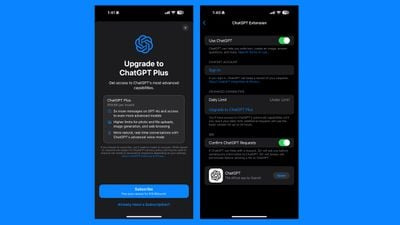
iOS 18.2 in December will offer GPT-4o integration with a $19.99 monthly Plus upgrade option to improve Siri. Siri is also getting screen awareness features for Apps
Google’s Jarvis AI 'onscreen awareness' tool leaked on the Chrome store. The AI extension may be out next month
Google Maps is getting new features powered by Gemini. The new updates will let users find new places to visit and answer questions about different locations. Gemini in Maps will also work as a social diary planner of sorts, allowing you to ask it about things to do in your local area based on preferences like “speakeasy” or “live music”
Amazon is adding a new AI feature to Prime video called X-Ray Recaps which will summarize an episode you’ve already watched. Unlike traditional episode summaries, X-Ray Recap will be personalized based on how much you’ve watched so far

Amazon’s drone delivery service has officially taken off in Phoenix, where select customers can now receive items like tech, beauty, and household supplies by drone within an hour. Using the latest MK30 drone—twice as fast and 50% quieter than its predecessor—Prime Air wants to make drone delivery the norm. Service is currently limited to daylight hours and fair weather, but plans to expand to Texas, the U.K., and Italy later this year
Microsoft launches “Magentic-One,” a new piece of open source infrastructure which allows users to direct multiple AI agents to work together to complete user tasks. Magentic-One employs a multi-agent architecture where a lead agent, the Orchestrator, directs four other agents to solve tasks. The Orchestrator plans, tracks progress, and re-plans to recover from errors, while directing specialized agents to perform tasks like operating a web browser, navigating local files, or writing and executing Python code. Agents available include:
Orchestrators - the lead agent responsible for directing the task
WebSurfer - the LLM-based agent that can surf the web in a browser
FileSurfer - the agent that can navigate files and folders
Coder - the agent who can write new code
ComputerTerminal - a console shell where code can be executed

Microsoft’s new Notepad AI editing + AI tools for Paint begin roll out. In Paint, with generative fill, you can make edits and additions with just a few words while maintaining the existing art style of your project
Doordash has announced a strategic partnership with Lyft which will add ride sharing services to its DashPass membership program. The new partnership is a direct attack on Uber’s Eats and Ride products and will see subscribers get monthly benefits like 2 free priority pickups per month
📚 Good reads
The current state of mobile app UX: 10 common pitfalls & best practices, by Baymard Institute. Includes ratings of 8,000+ UX elements and 7,000+ implementation examples across 26 leading mobile apps
Uber-Expedia, Q-commerce, and the seductive lies of network effects - why some models work in local markets and others don't? Sangeet Choudary talks about Economies of Density and brings new insights into how startups can (and should) create defensibility. Given that most large-scale, horizontal, non-capital-intensive markets are gone, startups increasingly face markets where these insights may be essential

Exploring Agentic AI: autonomous decision-making. Over the last few weeks we have been sharing multiple news pieces about AI agents (e.g. Google Jarvis project). This article does a good job explaining what Agentic AI is and what are some of its use-cases, like proactive healthcare solutions. Complement with this other new piece giving a UX perspective on AI agents

The pitfalls of overpreparation and how to start when you don’t feel ready. Anne-Laure Le Cunff shares a short but encouraging article on how to develop action bias
Session replays: how PMs can you use this tool to drive better Product decisions, by Aakash Gupta. I haven’t used LogRocket, the sponsor of the article, however I’ve been a longtime user HotJar and session replays is one of my favourite features
That’s all for this week. As usual, feel free to reach out and share your thoughts by replying back to this email or commenting on Substack
Thanks for your support!
Angel