

Hi folks 👋
Welcome to a new edition of el producto
🎰 The week in figures
$3.5B: Niantic, the company behind Pokémon Go and other AR best-sellers, is selling its gaming assets to Scopely for $3.5B. Scopely, famous for its Monopoly Go super-hit, is in turned owned by Savvy, which is part of the Saudi sovereign wealth fund. The price tag underscores how lucrative mobile gaming remains
28k: An AI tool from Butterfly Effect surged downloads from 5K to 28K daily, aiding AI agents in tasks; AI agent market projected to hit $42B by 2029
90%: Anthropic CEO Dario Amodei said he believes we have 3-6 months before 90% of code is made by AI, and that spies may be trying to get their hands on his $100M “algorithmic secrets”
25%: Almost 25% of job openings posted this year in the US so far are seeking employees with AI experience. A record number of US adults are now working multiple jobs, too, with 5.4% of the total adult workforce in multiple jobs 🙋
📰 What’s going on
Oracle now ranks among the leading candidates to take over TikTok’s US operations. TikTok has used Oracle servers to store data in the US since 2022, simplifying the potential transfer process. Chinese owner ByteDance apparently wants to retain some kind of “hands-on role” in US TikTok, and seems to view Oracle as more of a local partner than a buyer
TikTok is adding a new feature to help teens battle doom scrolling addiction. If a teen is using the app after 10pm, TikTok will show a full screen wind down reminder that will play calming music
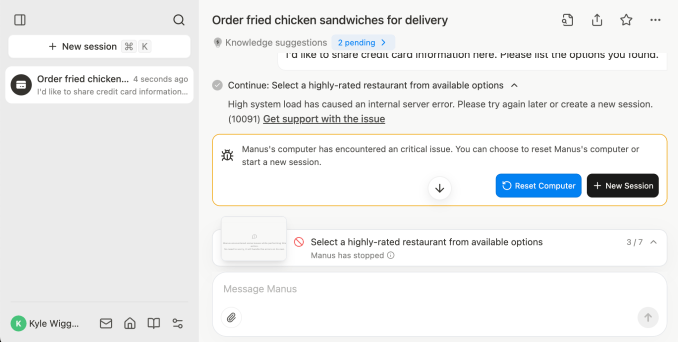
Is Manus the next R1? The capabilities of the ‘general-purpose’ AI agent, Manus—developed by Chinese start-up ‘The Butterfly Effect’ and hyped as the ‘next R1’ after it launched last week—are under question just days after its release. Initially, Manus—which was launched by invite-only—received rave reviews as being “the most impressive AI tool ever tried” by industry leaders, which saw it gain 138,000 users in just a few days. However, due to unexpected popularity, The Butterfly Effect had to reduce its availability as their “server resources were planned to meet a demonstration level” and couldn’t, therefore, handle the volume of users. Manus was built using a combination of existing AI models, including Anthropic’s Claude. Manus also partnered with Alibaba's Qwen team to enhance AI capabilities and expand user base
China clamps down on DeepSeek. In the wake of its breakout global success as an AI model company, staffers at DeepSeek are seeing their freedoms curtailed. Some of its staff are no longer allowed to leave the country, and have had their passports taken. That won’t help innovation, but DeepSeek is also enjoying a wave of patriotism-fueled uptake of its AI products
OpenAI has released a series of new APIs to help developers / Product teams add new AI capabilities to Products. Capabilities include: web search, file search and computer use
Microsoft’s “AI CEO”, Mustafa Suleyman, has made significant progress with internal AI models called MAI that supposedly match OpenAI’s models on benchmarks. Microsoft is swapping out OpenAI models for MAI models inside Copilot
Google has added native image generation into its Gemini 2.0 Flash models - and it looks pretty impressive. You can do things like merge text and images together, edit images using conversational prompts and generate legible text within images (something generative AI has struggled with so far). You can even take your own headshot and transform it into full body images. Logan Kilpatrick, the lead PM at Google, says that what makes this unique vs other models is Gemini’s “broad world knowledge”
Google is also rolling out a handy new Gemini powered feature for Gmail. An add to calendar button will extract key information from an email and create calendar events from it. This is a far more useful application of Gemini vs email summarisation
Gemini Robotics: Google has partnered with robotics developer Apptronik (which has previously worked with NASA and NVIDIA) to launch two AI models for robotics—Gemini Robotics and Gemini Robotics-embodied reasoning (ER)—which are built on its “most capable AI to date,” Gemini 2.0, and are designed to help robots “perform a wider range of real-world tasks than ever before”
Sam Altman is continuing to develop his other startup, formerly known as Worldcoin, now known as World. It seeks to become the next ‘everything app’ and plans to roll out a new form of payment method that includes a native crypto token and a biometric eyeball scanner known as an orb. The idea is that as AI agents start to take over the web, humans will need better ways to verify their “humanness” - and an eyeball scanning orb is one way to do it. It all sounds rather dystopian but this week, the company rolled out a mini app store that allows users to pay for items online
Apple’s next OS updates will reportedly include the biggest design overhaul in years. The update will refresh icons, menus, apps, windows, and system buttons while simplifying navigation and control
Meta plans to test community notes across Facebook, Instagram and Threads
WhatsApp is reportedly testing out a new threads feature that will organize conversations into threads
Skyfire, a startup founded by former Google and Ripple executives, exited beta and launched its payments network designed to enable AI agents to make autonomous transactions
📚 Good reads
[Podcast] Amazon’s CPO on the long road to Alexa’s overhaul. Panos Panay is in charge of devices and services at Amazon — that's everything from Alexa and Kindle to Ring, Eero, and even the Project Kuiper satellite internet service that's meant to compete with Starlink. He's led the team through giving Alexa a big AI infusion, which is what drew him to Amazon after nearly 20 years with Microsoft. He sees AI as a platform shift that will change the way we use computers
AI agents are becoming the workforce. It’s happening—companies are now crafting job postings for AI agents in plain language as if they were human hires. This shift signals a move toward AI as an autonomous workforce capable of executing tasks, negotiating, and seamlessly collaborating across businesses and with humans. The real transformation lies in how companies adapt their structures, workflows, and management models to integrate these agents. As AI moves from tool to active participant, organisations will need to rethink everything from onboarding to operational oversight and interpretability, as Anna Piñol's article points out
What if AI just killed outbound? AI-powered sales and content tools flood inboxes, social feeds, and ad platforms, scaling outbound efforts to unprecedented volumes. The result? A market oversaturated with AI-generated outreach, where attention, trust, and conversion rates plummet instead of improving. The belief that AI will 10x outbound efficiency and lower CAC is a fantasy. It may work in the short term and some selected contexts, but in the long term, we’re heading for diminishing returns and the collapsing effectiveness of traditional paid growth models. What happens next? There will likely be a massive shift in how businesses grow. The future of demand generation will be bottom-up, driven by Brands, Audiences, and Networks

Amazing things are happening in AI code gen. Andrew Chen shares his thoughts on how ‘vibe coding’ may shift bottlenecks towards creativity and distribution rather than the technical aspects of coding. Successful Products will depend on their ability to scale rather than simply being the first to market. However… (next article)
What happens when the price building software goes to zero? David Hoang shares how in a world where everything can be built, originality, high craft, and brand experience will become crucial. The future may shift the focus from strategic planning to rapid execution and iteration in design and development
Building a SaaS Product in 2 weeks with 100% AI-generated code. Sakky B shares his inspiring experience building a SaaS having no coding experience, just using tools like Cursor, Supabase, and Vercel. The entire development cost was only $75
That’s a wrap for this week! 🌟
I’d love to hear your thoughts—what stood out to you, and how are you thinking about integrating these insights into your product strategy? Reply to this email or drop a comment on Substack to share your take. And if you found this valuable, forward it to a fellow PM, Product enthusiast, startup founder or entrepreneur who’d enjoy the read
See you next week! 👋
Angel