

Hi friends 👋
Happy weekend, and welcome to a new edition of el producto
🎰 The week in figures
$500B: OpenAI is reportedly in talks with investors about a potential share sale, with a current company valuation of $500B. Just 4 months ago, after announcing a $40B funding round (the largest amount ever raised by a private tech company), it was valued at $300B - valuation kept after a recent $8.3B “mini” round
$2.3B: n8n is supposedly about to raise “hundreds of millions” in a new round that could value it at $2.3B (up from $350M four months ago)
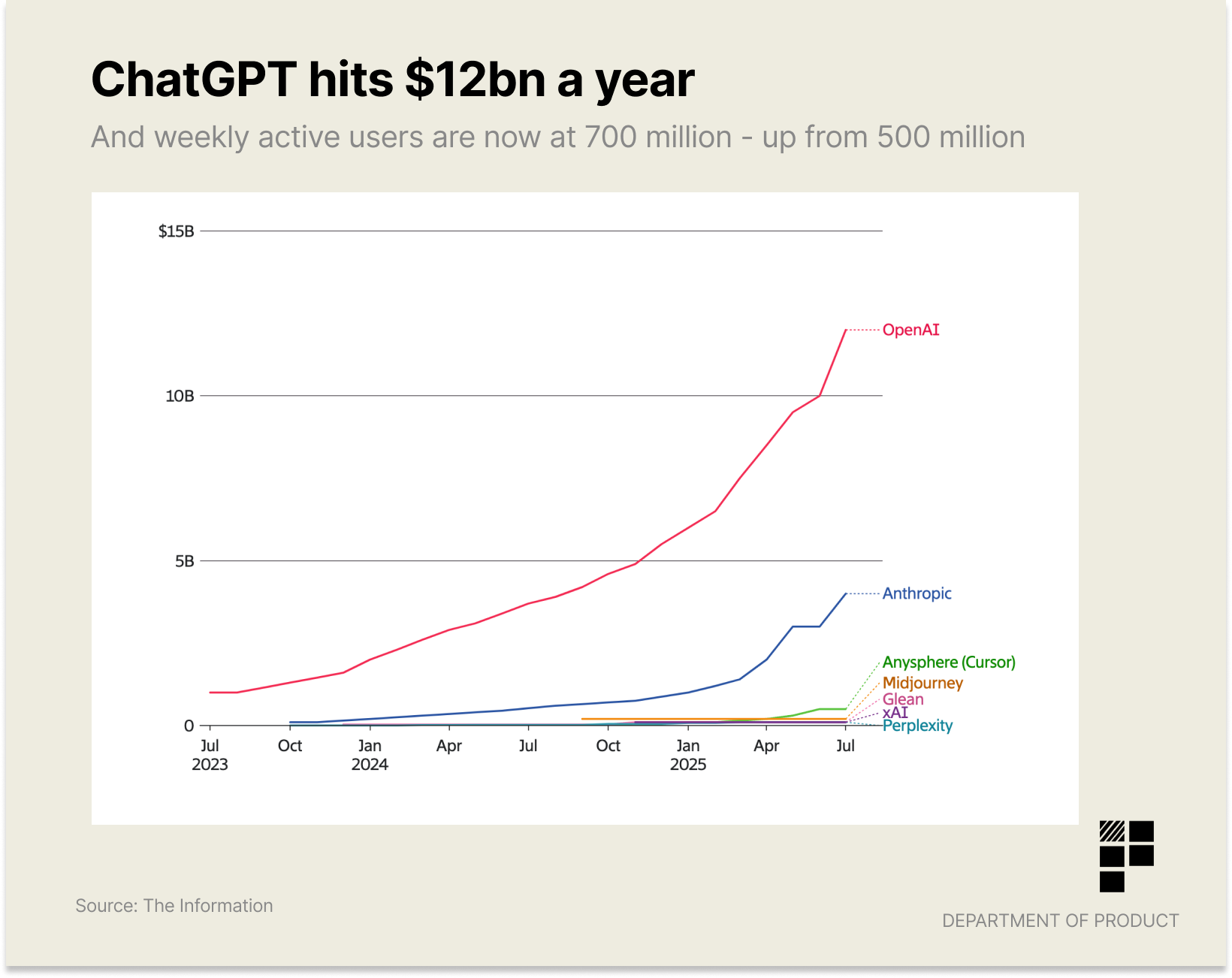
700M: ChatGPT has hit 700M WAU. This implies that OpenAI is now generating $1B a month ($12B a year), compared to $500M a month at the start of the year
416M: Reddit has reported 416M WAU, up 22% YoY Reddit Answers, the company’s new AI tool, reached 6M WAU, up 5x on the previous quarter, and its ML translation tool now supports 23 languages
$200M: Ripple, the blockchain giant, is buying stablecoin startup Rail for $200M. Rail is a Canadian payment processor (previously known as Layer2 Financial) that uses stablecoins to help customers move money quickly and efficiently across international borders. Just last year, Rail reported that they control around 10% all the world’s B2B stablecoin payments, valued at around $3.6B
$122M: Blue J, a Canadian AI tax-research platform, announced a $122M Series D funding to accelerate its legal-tech expansion
$100M: Clay, the AI-powered sales tools startup raised a $100M Series C at a $3.1B valuation. With total funding now $204M, the company aims for $100M in revenue by year-end, tripling last year's earnings
45%: Robinhood surpassed earnings expectations with $81M YoY growth in revenue, 2.3M new users, and 45% revenue growth
📰 What’s going on
Anthropic released “Subagents” in Claude Code. Subagents are pre-configured AI personalities that Claude Code can delegate tasks to. Each subagent has its own specific purpose and can be configured with specific tools that it's allowed to use. For example, a QA subagent could proactively investigate errors. Subagents can be created for any recurring or specialized task (e.g., test automation, documentation generation, compliance checks). Here’s a demo of it in action
Anthropic also upgraded Claude Opus to 4.1. The upgraded model scores a 74.5% on the software engineering SWE test vs 72% for Opus 4
OpenAI unveiled its latest GPT-5 model, and it scores 74.9% on the SWE test, up from o3’s 69.1%. GPT-5 comes with some impressive vibe coding abilities, and OpenAI has published a gallery of apps you can explore. GPT-5 is more agentic and can complete a range of tasks (like building apps, accessing calendars, and creating briefs) on behalf of users
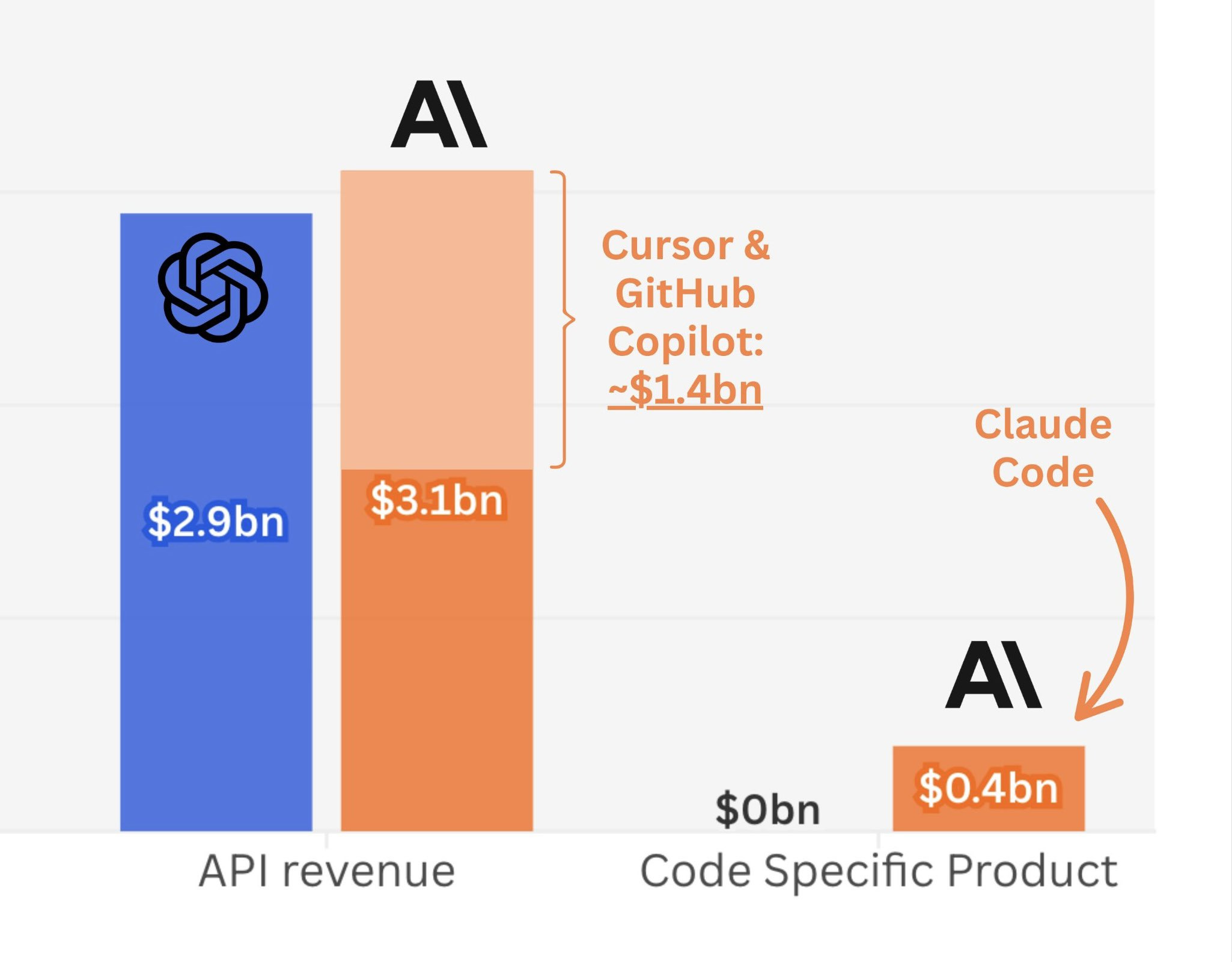
Anthropic and OpenAI are essentially neck and neck with barely a decimal between them, but according to new analysis, Anthropic is in a pretty risky position with almost~50% of Anthropic’s API revenue coming from just 2 customers: GitHub Copilot and Cursor
OpenAI has launched two ‘open’ AI reasoning models—a small one (gpt-oss-20b), which can run on a laptop, and a larger, more capable one (gpt-oss-120b). Both have similar capabilities to the o-series. This comes after CEO, Sam Altman, said OpenAI was “on the wrong side of history” when it came to open-sourcing its tech, as it faces pressure from the likes of “open-source” DeepSeek and Meta. Amazon is now hosting OpenAI’s two new open source models, which is the first time (maybe ever?) OpenAI models have been available on AWS
Apple is forming a team to create an AI "answer engine" akin to ChatGPT. This could improve Siri and other products' search functions, potentially affecting Apple's Google search deal amid antitrust concerns
Meanwhile, Apple will bring GPT-5 to iOS. iOS and MacOS users will soon have access to GPT-5 with the release of iOS 26, iPadOS 26, and macOS Tahoe 26 (next month). That’s not instant, but it is faster than Apple’s usual AI pace
Google announced ‘Guided Learning,’ a tool that breaks down “complex problems step-by-step to support deeper understanding.” This comes just days after OpenAI announced ‘study mode.’ Given that it seems impossible to stop students from using AI in their studies, tools like what the two tech titans are bringing to market could help make a complicated situation more palatable
Google also enhanced its NotebookLM for teenage users, featuring Audio Overviews and Mind Maps, and improved content policies to ensure data privacy
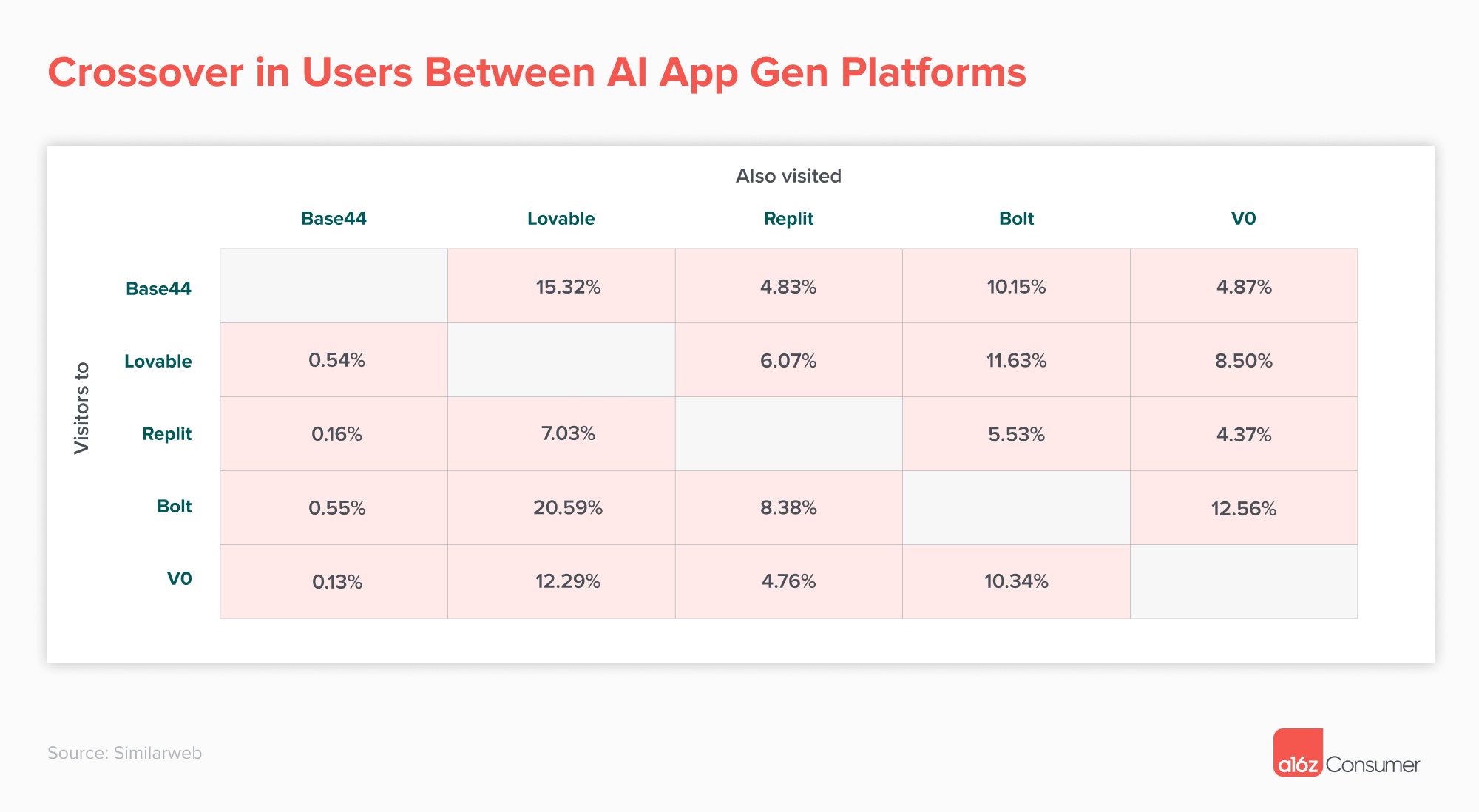
New analysis shows there is some cross-over in users of vibe coding apps. Nearly 21% of Bolt users also browsed Lovable over a three-month time period. And, 15% of Base44 users also checked out Lovable. One VC says that churn for vibe coding products like Lovable is “huge”
Meta is reviving its smartwatch plans, potentially launching a model with a built-in camera at Meta Connect Sept 17
Meta acquired WaveForms AI, which creates a series of audio AI models that can recreate (and respond to) human emotions
X will start including ads, as suggestions, in Grok responses, following the shock exit of his CEO, Linda Yaccarion, last month. According to Musk, now that he has “largely succeeded” in making Grok “the smartest, most accurate AI in the world,” it’s now time for him to focus on “how to pay for those expensive GPUs.” He’ll use technology from his AI start-up, xAI, to improve the targeting of ads
Vine archives return. Elon Musk announced the return of the Vine archives, allowing X users to access and post old Vines. Meanwhile, xAI launched Grok Imagine, an AI tool that generates short videos from text prompts
DeepMind introduces Genie 3, an innovative world model advancing towards AGI. Capable of generating interactive 3D environments and maintaining physical consistency
Perplexity announced a partnership with OpenTable that lets users book restaurants directly within Perplexity without leaving the app. It’s positioned as “powered by OpenTable” which is a win for them. Becoming the default partner in AI search products for specific niches could become pretty lucrative over time with the right revenue share model, but as with all other parts of the web that are increasingly getting hoovered up by AI, it also risks destroying the direct relationship users have with brands. Ecommerce companies are starting to worry about this
Shopify is launching a series of new tools that use AI agents in its ecommerce stack. This includes a new checkout kit and the use of MCP UI - an extension of the MCP protocol, which allows companies to embed images of their products directly inside AI conversational tools
Figma’s MCP server can now read annotations directly from your Figma designs. This means any notes about interactions, accessibility, or other design considerations are surfaced to AI agents when generating code
📚 Good reads
Ultimate AI design stack for fast product building. Felix Haas shares his go-to toolkit for turning rough ideas into polished products, using ChatGPT for logic, Lovable for rapid UI prototyping, Figma for design precision, and Supabase for instant backend setup. He emphasizes starting with user flows and logic before jumping into visuals, focusing on core product actions, and using AI to uncover edge cases. Skip the extras—get your core loop working first, then iterate smarter with AI
How to create an AI product strategy that actually works. Most AI products fail because teams treat AI as a bolt-on feature, not a business model shift. The article breaks down why moats—not models—matter, and shares a practical three-lens framework for building defensible, compounding AI products. If you want your AI roadmap to survive the next API update, strategy is everything

Google’s Head of Search says AI in search is driving more queries and higher quality clicks. People are searching more and asking new questions that are often longer and more complex. In addition, with AI Overviews, people are seeing more links on the page than before
GitHub’s CEO has warned that engineers should embrace AI or get out of engineering. It’s a pretty blunt assessment, but also a sobering wake-up call for engineers who still aren’t adopting AI in their daily workflows. GitHub, of course, has an AI coding product to sell
Why dependency management isn’t your real problem, by John Cutler. Most teams obsess over tracking dependencies, but the real issue is unclear priorities and overcommitment. When everything is labeled urgent, teams end up playing “scheduling Tetris” instead of focusing on what truly matters. The fix? Shift from managing dependencies to maximizing value throughput and making tough investment calls
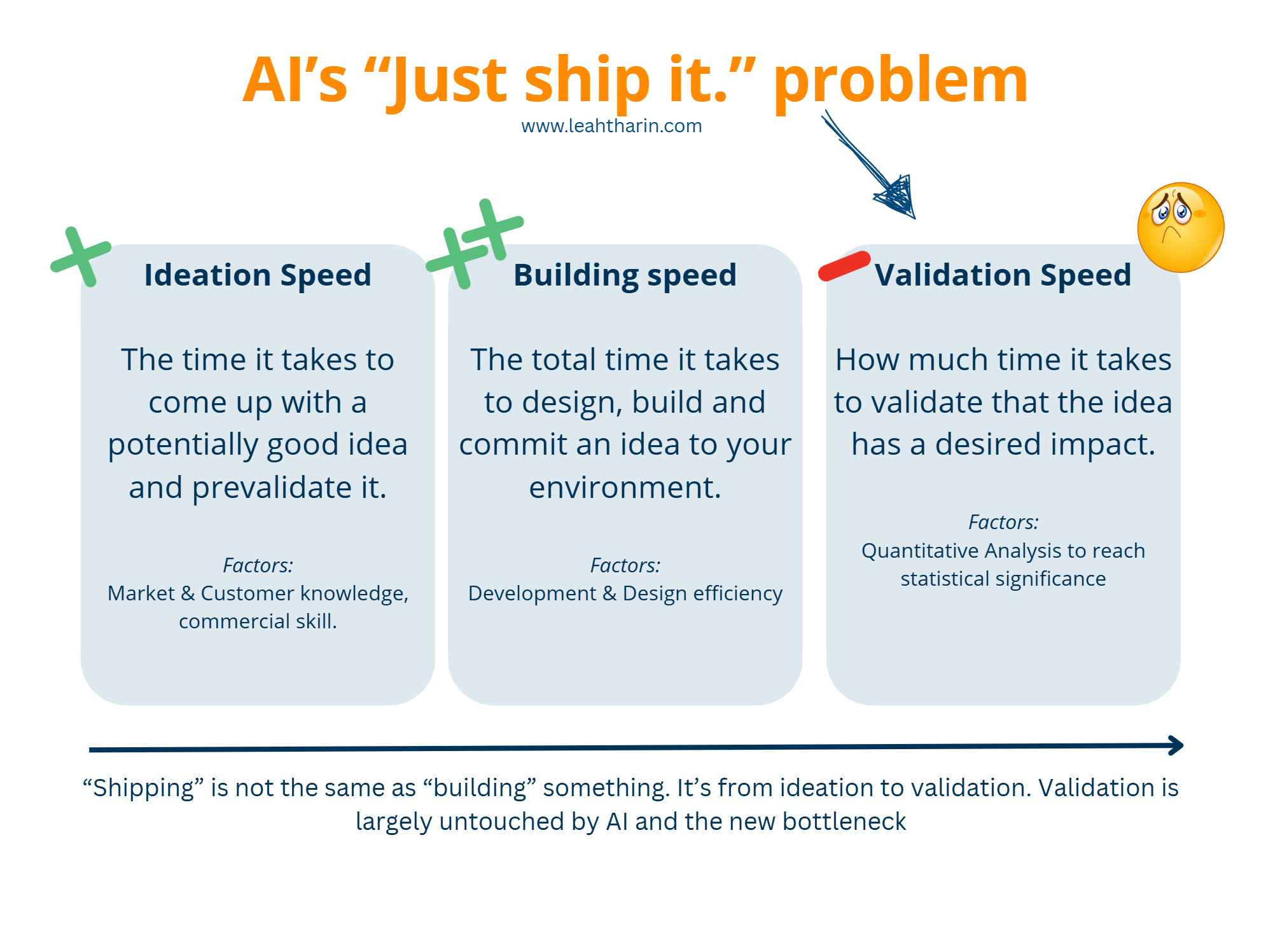
AI’s “just ship it” mindset: why speed isn’t everything, by Leah Tharin. AI can boost productivity for simple tasks, but complex work still needs human brains—and validation remains a bottleneck. Shipping fast is great, but skipping validation can backfire, even with AI in the mix. Ultimately, building the right product for the right market is still what matters most
7 AI tools powering a $1M+/yr business. Aakash Gupta shares the exact AI workflows that save him hundreds of thousands in costs, from automating emails to editing podcasts. He breaks down how tools like Claude, Cursor, and Lindy help him prototype, code, market, and strategize—no dev team required. If you’re a PM looking to scale smarter, these practical examples are worth a look
That’s a wrap for this week! 🌟
I’d love to hear your thoughts—what stood out to you, and how are you thinking about integrating these insights into your Product strategy? Reply to the email or drop a comment on Substack to share your take. And if you found this valuable, forward it to a fellow PM, Product enthusiast, startup founder or entrepreneur who’d enjoy the read
More next week! 👋
Angel