

Hi friends 👋
Happy weekend, and welcome to a new edition of el producto
🎰 The week in figures
$4.5T: Nvidia surpassed a $4.5T market cap on growth in AI infrastructure deals, including a $100B equity stake with OpenAI and a $500B data center project. With stock prices rising and AI chip demand soaring, Nvidia cements its tech dominance
$1.1B: Cerebras Systems, the AI inference services startup, raised a $1.1B Series Ground valued at $8.1B. This funding will enhance data center and U.S. manufacturing expansion, with an IPO planned despite regulatory delays
1B: Meta announced it will use AI chatbot conversation data for ad targeting starting December 2025, affecting over 1 billion monthly users who cannot opt out except in the EU, UK, and South Korea
$500B: OpenAI closed a $6.6B secondary share sale at a $500B valuation, becoming the world’s most valuable private company. Allows employees to cash out while staying private, highlighting strong investor confidence in the strategic direction
$300M: Vercel secured $300M in funding at a $9.3B valuation, with its AI development tool v0 attracting 3.5M users
$300M: Periodic Labs, the AI-driven scientific discovery startup, founded by ex-OpenAI and Google DeepMind researchers, secured a record $300M seed round from Andreessen Horowitz, Nvidia, Jeff Bezos, and Eric Schmidt
11k: Accenture is laying off 11,000 workers - mostly folks where “upskilling in AI is not a viable path”. A pretty harsh reminder of the consequences of not becoming AI fluent in 2025
📰 What’s going on
Apple has scrapped its lighter Vision Pro plans to develop two new smart glasses models. The display-free model targets a 2027 launch, while a display version is accelerated to meet Meta’s market lead
Apple built a ChatGPT rival to internally test its new “AI-first” Siri set to debut next year
OpenAI launched a new Sora video app. The Sora app is OpenAI’s first major move into the consumer product space (outside of ChatGPT). So far, the app’s most popular type of video seems to be memes involving CEO Sam Altman, and the market response has been mixed. Sora lets users “Continue with ChatGPT” - a new type of login that could pave the way for it to compete with the likes of Google for single sign-on
OpenAI’s new shopping feature allows users to buy products directly inside ChatGPT and has been built in partnership with Stripe. As part of this, Stripe announced a new open standard payments protocol called ACP (Agentic Commerce Protocol), which provides a blueprint for how businesses can make their checkouts agent-ready so that customers using AI agents can buy products directly from where they’re discovering them
You can now use Nano Banana natively inside Google Slides to make edits to images. As well as editing, you can use prompts inside Slides to place objects in different surroundings e.g. “Place this product in a New York Subway station”

Google previewed a Gemini-powered Home speaker for spring 2026 with advanced AI capabilities including natural conversations and Matter hub compatibility
Google’s Jules, Google’s coding agent, now comes with tools and works directly in your terminal, so you can assign tasks like “write unit tests” or “fix bugs” directly from your terminal and script it into your existing workflows
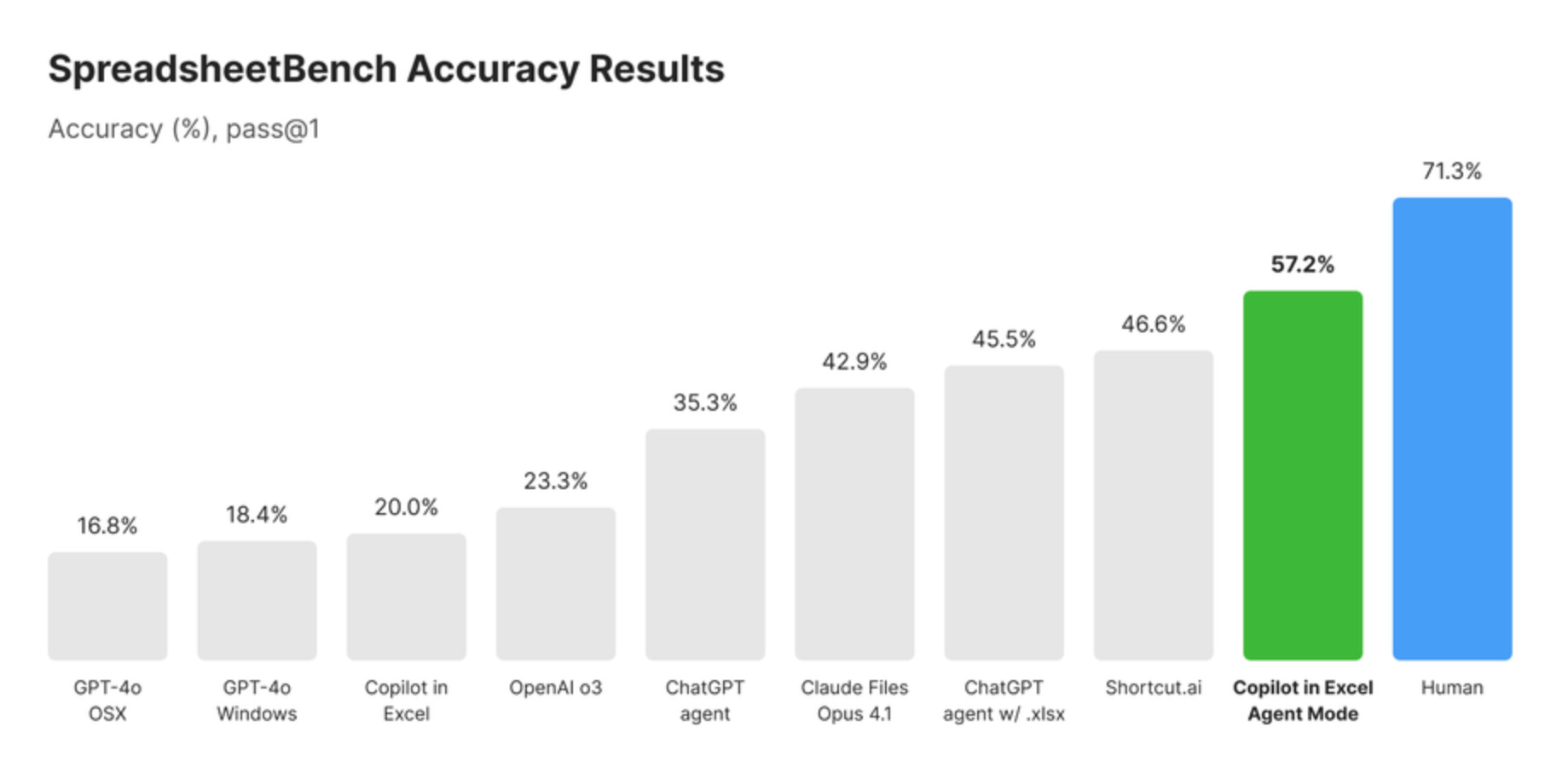
Microsoft has launched a new set of AI agents that it is labelling “vibe working”. The “vibe”-oriented branding is a little cringe at this point, but if these agents can do what Microsoft claims, then they’ll be a pretty good addition to the workplace productivity stack. The agents include Agent Mode in Excel, Word, and PowerPoint, and Microsoft says that its spreadsheet agent “can speak Excel” natively, meaning it can create spreadsheets and evaluate them. Microsoft’s Product leaders give their perspectives on these agents here
Salesforce launches Agentforce Vibes, an enterprise vibe coding platform with AI agent ‘Vibe Codey,’ surpassing Microsoft and taking the lead at cringe branding
Cursor unveiled its new agentic abilities, too. Cursor can now control your browser, which allows it to do things like take screenshots to debug issues, improve UI, and more
Anthropic released Claude Sonnet 4.5, an upgrade to its mid-sized model lineup. The new model is quite good at writing code, though Every puts it one step below OpenAI’s GOT-5 Codex for some tasks. Anthropic also upgraded its API, and teased a vibe-coding service
Perplexity released its Comet AI browser free for all users (previously $200/month), featuring autonomous task capabilities across 800+ apps. I’m still on Dia!
Perplexity acquired Visual Electric’s team to expand beyond search into creative AI
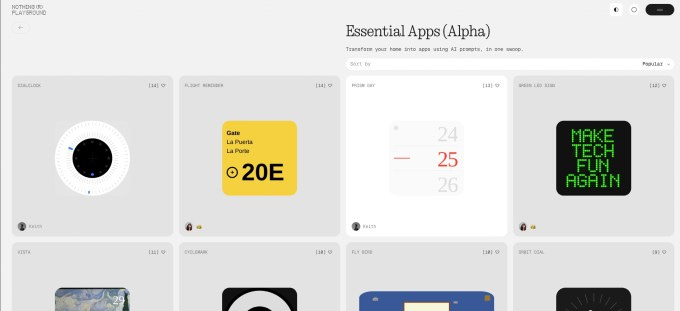
Nothing, the smartphone manufacturer, has launched a new feature that will let users vibe code their own mini apps with simple text prompts, and then publish them in their App Store. They look a bit like widgets, and Nothing says they won’t be full screen apps for now since the technology isn’t quite ready. Some of the mini apps that people have already built so far include a flight tracker, next meeting brief, and virtual pet
Replit released some vibe coding updates of its own with “Connectors” - mini automations that allow you to build mini apps through automations that connect Replit’s Agent to third party software like Notion, Discord and Zendesk
Amazon launched a new line-up of devices, including Echo speakers, Ring cameras, Kindles, and Fire TVs, that all come with a newly upgraded pre-installed AI Alexa (Alexa+).
📚 Good reads
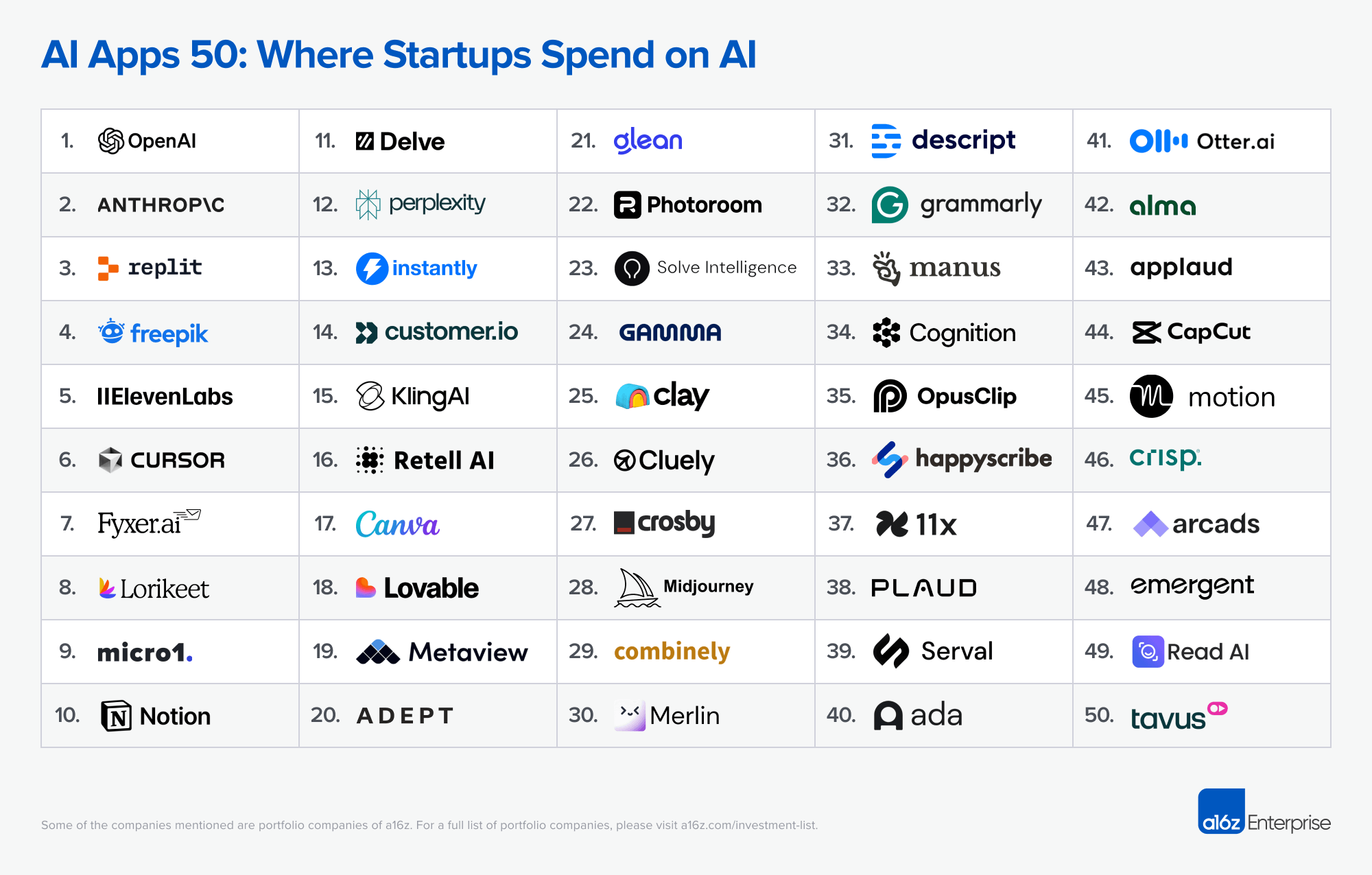
A16z’s new report breaks down the top 50 apps that startups are spending money on
UX tips to make “Aha moments” click. The folks at growth.design are back with an excellent visual case study of Too Good To Go's onboarding journey
Good ideas are your only moat now. AI is shrinking technical moats, so the real edge is the quality and cadence of your ideas. Derek Thompson warns that offloading thinking to AI erodes deep reading and systems thinking—the skills PMs need most. Jaclyn Konzelman shares a useful playbook: consume widely, talk to diverse builders, and prototype through side projects and writing to keep your brain under tension
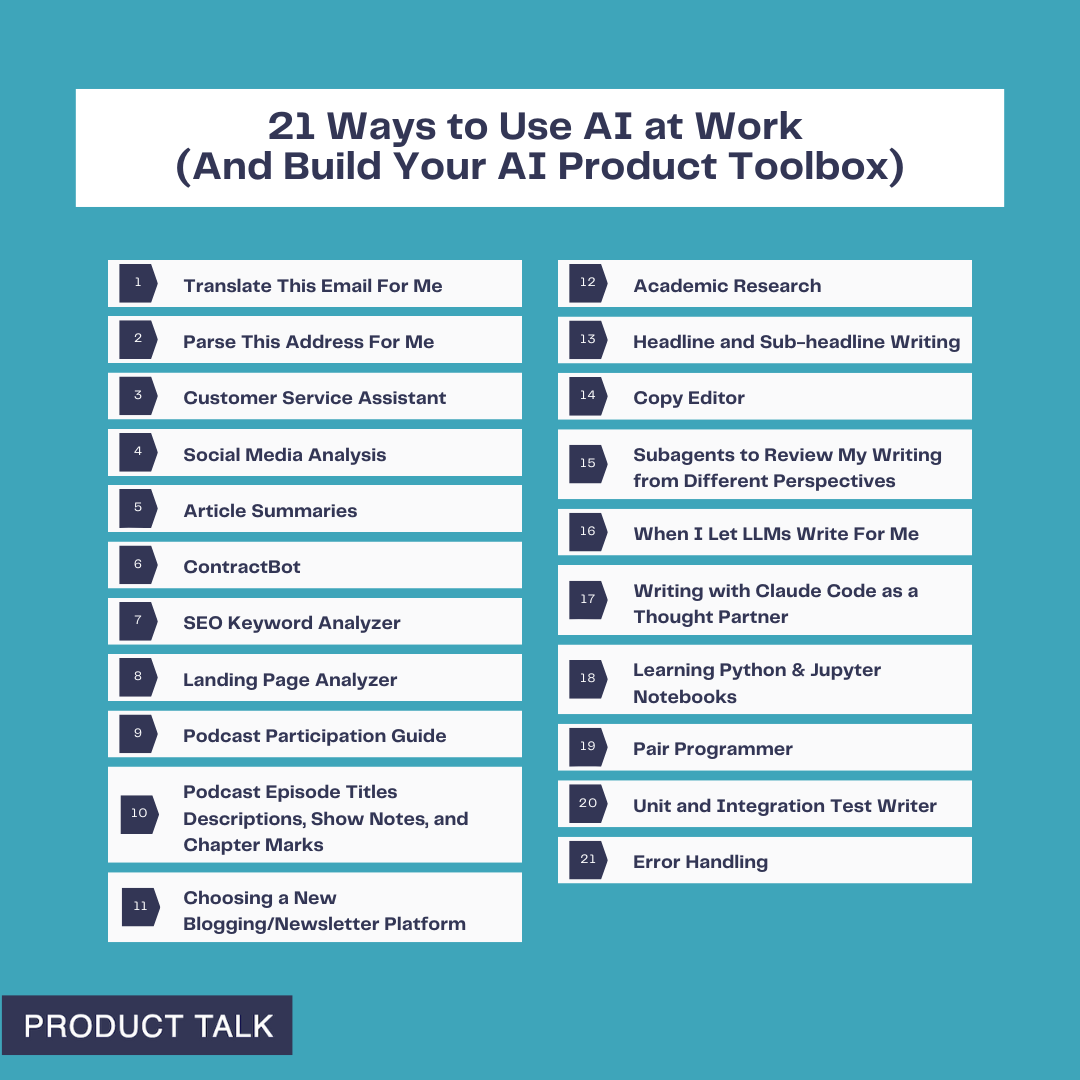
21 ways to use AI at work. Teresa Torres shares practical LLM workflows—from simple translation and parsing to assistants that analyze social, summarize articles, review contracts, and critique SEO/landing pages. This is a solid toolbox to operationalize research, writing, and light automation for PMs
Building ai products competitors can’t match. Ravi Mehta shows how to use off‑the‑shelf models plus your unique data and functionality to build moats. In crowded, fast‑moving “red oceans,” advantage comes from smart assembly: context, output, orchestration, and tool use. Examples like Miro and Granola show that solving unmet needs beats custom models, turning what’s uniquely yours into defensible value

Real AI agents and real work, by Ethan Mollick. AI can now do complex, economically valuable tasks, but jobs are bundles of varied work where human judgment still matters. New “agentic” models are getting self-correcting and better at multi-step tool use, enabling things like at-scale research replication—while also risking floods of pointless content. But there are some things you can start automating quite decently: delegate first passes to AI, review and iterate a couple times, then take over if needed—yielding faster, cheaper outcomes without losing control
AI-native performance reviews are here. OpenDoor and others now judge how effectively you default to AI, not just if you use it. The edge comes from six skills: AI prototyping, vibe coding, co‑pilots, agents, advanced ChatGPT, and Claude for strategy. Aakash Gupta explains how to make AI your baseline in 30 days: track adoption, build agents, ship demos fast, and show business impact
[podcast] Delight is a product strategy, not decoration. Nesrine Changuel argues real delight blends functional wins with emotional resonance, anchored by 3 pillars: remove friction, anticipate needs, exceed expectations. She shares a practical 4-step model (motivators → opportunities → solutions grid → checklist) and a 50-40-10 roadmap rule to balance core functionality, deep delight, and surface delight. Examples from Spotify, Chrome, and Google Meet show how familiarity, emotion, and continuous iteration drive retention—and help PMs win in crowded markets
That’s a wrap for this week! 🌟
I’d love to hear your thoughts—what stood out to you, and how are you thinking about integrating these insights into your Product strategy? Reply to the email or drop a comment on Substack to share your take. And if you found this valuable, forward it to a fellow PM, Product enthusiast, startup founder or entrepreneur who’d enjoy the read
More next week! 👋
Angel