

Hi friends 👋
Welcome to another Week in Product!
🎰 The week in figures
$15B: Salesforce is investing $15B over five years to boost AI adoption, establish an AI incubator, and support local businesses
$3B: Revolut is about to close a $3B round at a $75B valuation. That price tag makes Revolut one of the fifteen most valuable companies in the UK and one of the world’s most richly-valued private companies. Congrats to my ex-colleagues still there!
$2.2B: Polymarket, a prediction market platform based in NY, secured $205M across two funding rounds before a $2B investment from ICE. The partnership positions it at a $9B valuation, and shows institutional interest in event-based trading
$900M: Oura has raised $900M in a Series E round, lifting the Finnish wearable maker’s valuation to $11B as it doubles down on preventive health tech
$300M: Deel raised $300M to scale its payroll infrastructure in over 100 countries by 2029, bringing its valuation to $17.3B
$300M: Kalshi, another U.S.-based prediction market platform, raised $300M at a $5B valuation, up from $2B just 3 months ago
$165M: Upgrade raised $165M to expand its consumer finance platform, reaching a $7.3B valuation with targets to IPO in 12 to 18 months
50 Waymos were hacked by a 23yr old in San Francisco
75%: Pinterest added feed controls to reduce AI-generated content after discovering up to 75% of wedding search results were AI-generated
32%: Stripe has seen a 32% WoW growth in the number of users of its MCP; top MCP use-cases include searching product catalogs, creating or retrieving prices, and reading docs
📰 What’s going on
Gemini 3.0 may arrive in December. Despite some internet sleuths turning up mentions of Gemini 3.0, insider sources suggest that the GPT-5 competitor will not arrive until December. Google’s Gemini 2.5 model currently owns the third-place rank on LMArena’s leaderboard, losing out to two releases from Anthropic while pipping competing products from OpenAI
Google AI Studio got a refresh that combines Chat, GenMedia, and Live into a single UI so its easier to work with them all.
Google’s Nano Banana image editing model is being rolled out across more Google products, including Search and NotebookLM. In Google Search AI mode, users can upload photographs and edit them with Nano Banana through Google Lens, and in NotebookLM, Nano Banana is powering Video Overviews
Google also introduced new Workspace updates: “Help me Schedule” in Gmail powered by Gemini, designed to make it easier to find a meeting slot with a colleague, new Google Meet face filters (AI makeup), and an update for its Sheets AI function, adding real-time results from Google Search
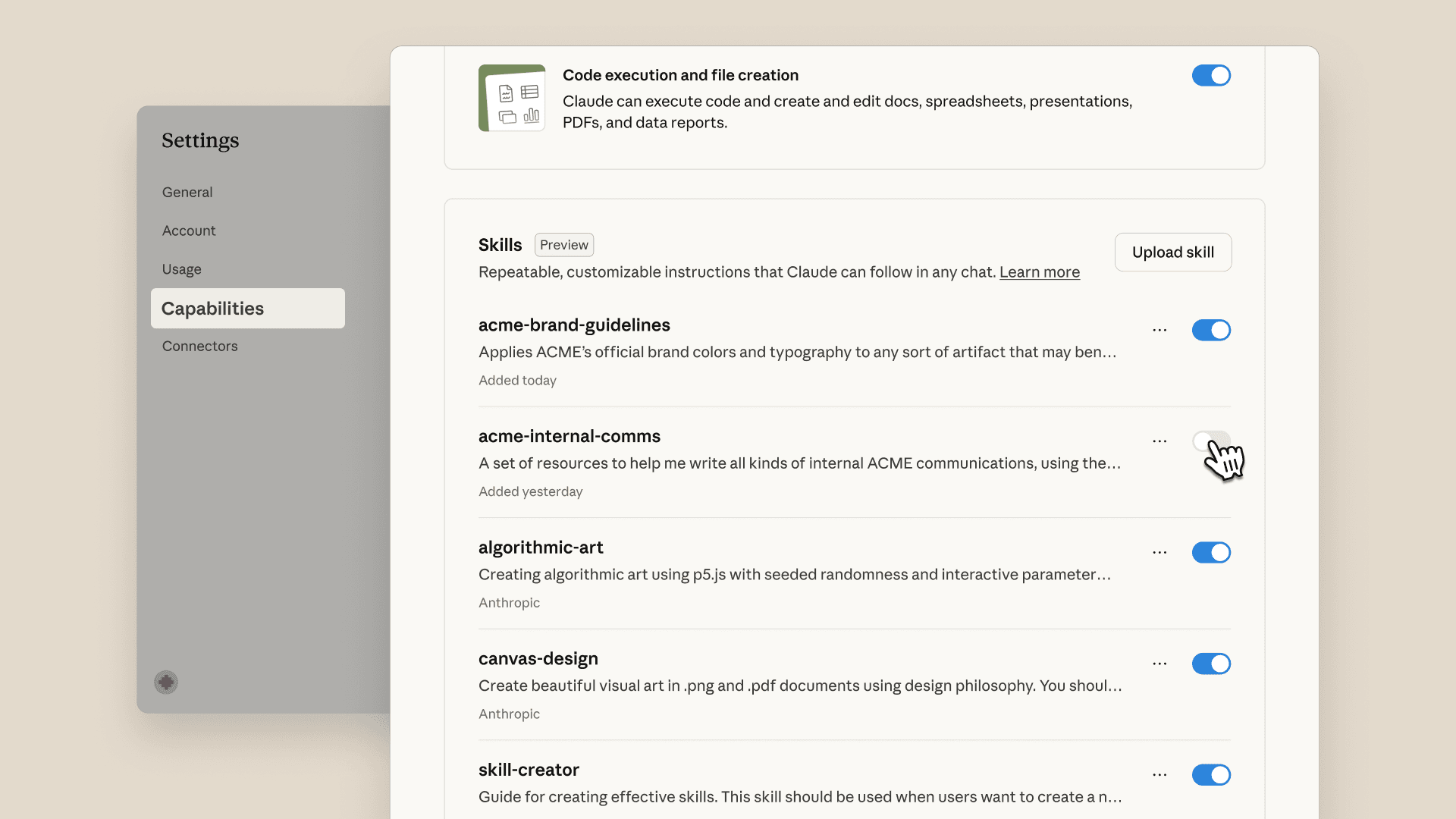
Anthropic has launched a new capability in Claude called “Skills”. Skills are reusable snippets designed to help AI Agents achieve specific tasks more effectively. E.g., you might use a brand guidelines Skill to generate PowerPoint decks and Word docs that auto-apply approved templates, fonts, and tone. Or you might use an image editing Skill to automatically edit images uploaded directly into Claude
Anthropic has also launched Haiku 4.5, a redesigned version of its smallest AI model, aiming to make powerful AI cheaper for businesses. The move shows a growing trend toward AI systems that deliver strong execution without the massive toll of flagship models
n8n’s new Workflow Builder creates automations from natural language: type “send a Slack message when I get an email from my boss“ and it generates the complete workflow with nodes and logic that you can refine and deploy—free trial (20 prompts), then Starter plan (50 prompts) or Pro (150 prompts)
Walmart has confirmed a major partnership with ChatGPT that will allow users to buy products through its new Agentic Commerce Protocol. ~40% of Walmart’s revenue is online ($240B)
Spotify is adding new conversational UX to its DJ feature. Users will now be able to make DJ requests in text, in addition to voice. Spotify says that conversational voice features have boosted engagement with their virtual DJ
Spotify also partnered with major labels to develop artist-first AI music products with fair compensation and opt-in controls
New Apple products announced: MacBook Pro, iPad Pro, and Vision Pro, all with M5 chips, + mixed reality smart glasses coming soon
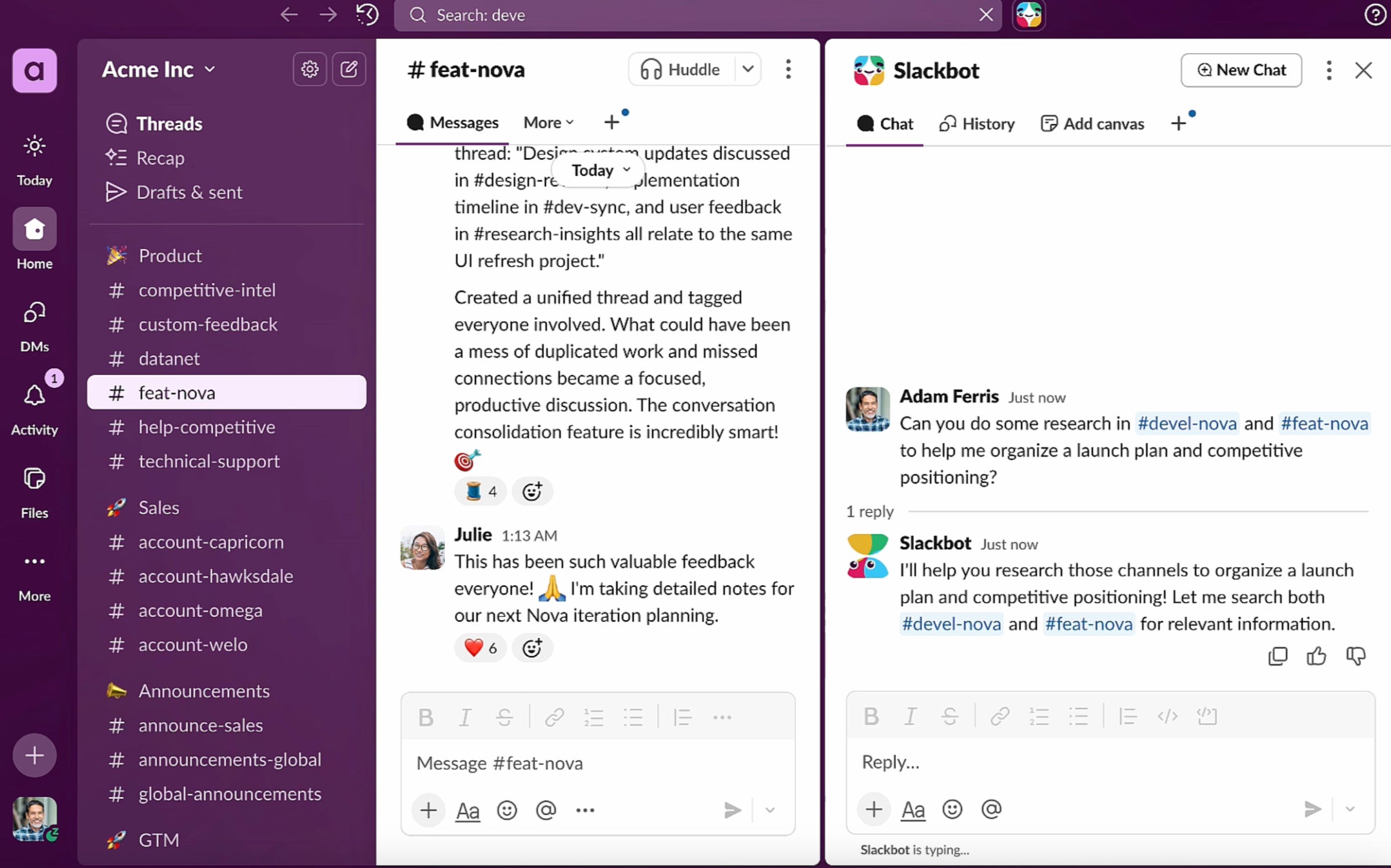
Slack is turning Slackbot into a personalized AI assistant. Slack is piloting a smarter Slackbot that can search across channels, compile plans in Canvas, and coordinate meetings via Outlook and Google Calendar. It pulls from your workspace to answer natural-language prompts like “find the doc Jay shared,” while keeping data within AWS’s VPC and out of model training. Rolling out beyond Salesforce’s 70,000 employees to pilot customers, with general availability targeted by the end of the year. I’ve been testing it for a few weeks, and it’s quite decent. Meanwhile, tools like Claude are getting access to Slack content via MCP, allowing you to do a similar thing from Claude, which I also tested and performed poorly, easily hitting Claude’s conversation limits
Otter.ai, the San Fran startup, is evolving from a meeting transcription service to an enterprise knowledge management platform, launching an API suite for integration with tools like Jira and HubSpot
Apple lost Ke Yang, head of web search efforts, to Meta in a continuing trend of high-profile AI departures
Visa launched a Trusted Agent Protocol to enable secure AI-agent commerce between buyers and merchants
📚 Good reads
AI supercharges product discovery for PMs. Aakash Gupta explains how AI shrinks discovery efforts with market/customer intel, rapid prototyping, and continuous synthesis. You can now ship more winners by testing faster, monitoring competitors with agents, and prioritizing with data-backed frameworks. Aakash argues you can get the same quality insights with 80% less time
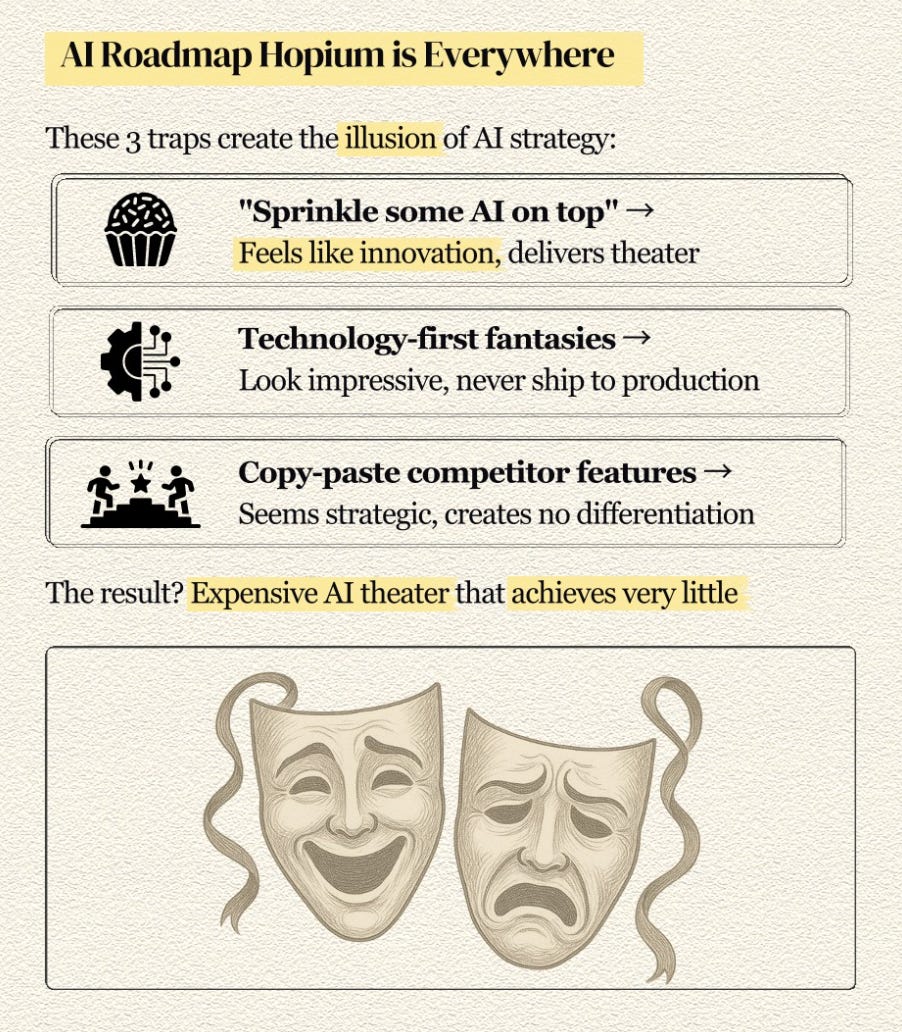
Your AI roadmap is probably corporate hopium. Another great read by Aakash Gupta this week. Most teams chase trends or bolt AI onto old features, skipping real strategy. He suggests to start with a crisp mission, craft an AI‑native vision, and then design moats. Only then, build a learning‑focused roadmap that sequences toward that North Star
The curse of modern AI tools. Nick Babich explains how chat-first interfaces make complex intent hard to express, so users waste time crafting and reworking prompts. Prompt packs and example use cases help only superficially; the real need is context, constraints, and modular workflows. Product teams should expose steps, add live output previews, or even treat voice as a primary input for complex tasks
Linear has published a page with a list of all of the AI Agents that the company now supports. These include agents for logging and fixing bugs, writing requirements, and more. Their head of product also shared how the company uses AI agents internally. A PM can write up a spec, delegate it to the AI Agent, and push it to production
The State of AI Report 2025, by Air Street Capital. Over 300 pages with some interesting insights for product folks:
Claude and Cursor are the most adopted tools this year, while ChatGPT and Perplexity are the most dropped
Langchain is the most popular framework for building AI agents
The average contract value for an AI enterprise software product has grown from $39k in 2023 to $1M in 2025
AI-first companies are growing from launch to $5M ARR at a 1.5x faster rate than the top 100 SaaS companies in 2018
MCP is the most adopted protocol for AI Agents, with 15k estimated servers globally
Criminal ransomware with AI agents emerged
Agentic MCP configuration tackles tool overload by dynamically loading only needed servers, by Tadas Antanavicius. If you are using MCPs in any way (e.g., connecting tools to ChatGPT or Claude), this article will resonate. If you are not using MCPs yet, trust me, you will in the next few months (or days), and this article will be very relevant. Instead of wrangling tons of MCP tools, the proposed approach lets agents pick and install just the few MCP servers relevant to the task, keeping context lean and performance snappy. It relies on a simple “trusted servers” list plus standardized server.json configs to spin up subagents on demand. Compared to RAG‑style tool search, it uses LLM inference to choose servers—and scales cleanly with groups/toolsets as MCP matures. This may still sound too abstract for many, but things are moving really fast here, and PMs need to get familiar with this
That’s a wrap for this week! 🌟
I’d love to hear your thoughts on WIP. Reply to the email or drop a comment on Substack to share your take, and if you found this valuable, forward it to a fellow PM, Product enthusiast, startup founder, or entrepreneur who’d enjoy the read
More next week! 👋
Angel from WiP

Hey, great read as always. It's truely reflective how these colossal investments, especially in AI, are rapidly reshaping our technological future.