Hi friends 👋
Welcome to another Week in Product!
🎰 The week in figures
$500M: Tempo raised $500M in Series A, valuing the payments-focused blockchain developed by Stripe and Paradigm at $5B for stablecoin payments
$250M: Sesame, an AI-powered smart glasses maker led by Brendan Iribe, co-founder of Oculus, landed $250M. Already has 1M+ early users, and their team includes former Oculus execs
$250M: Plata raised $250M at a 3.1B valuation, as it moves to become a fully licensed bank to democratize financial services for Mexico’s underbanked population
$200M: OpenEvidence raised $200M at a $6B valuation (nearly 2x its value from July), with its ChatGPT-like tool for doctors now supporting approximately 15M clinical consultations monthly across 10K+ medical centers
$125M: LangChain achieved a $1.25B valuation after raising $125M in a Series B. Transitioning from an LLM wrapper to key AI infrastructure, it supports advanced AI agents for enterprises
2.7M: Meta AI’s mobile app has seen a major increase in engagement, with its DAU jumping to 2.7M as of last week, up from roughly 775k just four weeks prior, while daily app installs have climbed to 300k. The spike aligns with the launch of its “Vibes” feed in September, which introduced short-form AI-generated videos to the app
600: Meta is cutting 600 jobs from its FAIR division (AI research), to shift focus to the TBD Lab superintelligence unit, targeting commercial AGI over academic AI
100: Top AI researchers at OpenAI, Anthropic, Google, Meta, and Microsoft are working 80-100-hour workweeks in what several have compared to wartime conditions
90%: Anthropic’s CEO says that 90% of the code at the company is now written by AI: “Claude is writing 90% of the code, what that means, usually, is, you need just as many software engineers. You might need more, because they can then be more leverage”
76%: A BBC-led study across 18 countries found AI assistants misrepresent news content 45% of the time, with Gemini performing worst at 76% error rate
75%: Amazon introduced the Blue Jay robot to automate 75% of warehouse tasks, reducing human roles
74%: Since the launch of the first generation of AI browsers, Dia and Perplexity Comet earlier this year, Google Chrome’s market share has actually increased - up from 64% to 74% year on year. Will things change with Atlas?
8%: Wikipedia said traffic to its website declined ~8% YoY due to genAI summaries and young people using “social media” (YouTube and TikTok) as search engines to seek information
💵 Q3 earnings
Netflix: revenue up 17% YoY. Product changes that helped drive the growth included an updated TV UI, which is now on 85% of TV devices, a new conversational search that helps users discover titles easily, and genAI-powered localization, which boosted retention. Their CEO said that the company is going “all in” on AI
📰 What’s going on
Anthropic launched Claude Code on the web, letting developers and regular agent users alike run coding tasks directly from their browser
OpenAI acquired Sky, an AI-powered interface for Mac that floats over your desktop to help you think and create — built by the same team that created Apple’s Shortcuts
OpenAI Takes on Chrome. ChatGPT Atlas launched: an AI-powered browser with a unique agent mode, capable of booking flights and editing documents. Its personalized memory and split-screen interface aim to revolutionize web browsing
Microsoft relaunched Copilot Mode in Edge as its name-brand version of OpenAI’s Atlas. Copilot can follow you as you browse, reasoning over your tabs, trace connections between your open tabs to understand context, summarize + compare information, and take actions like filling out forms or booking hotels
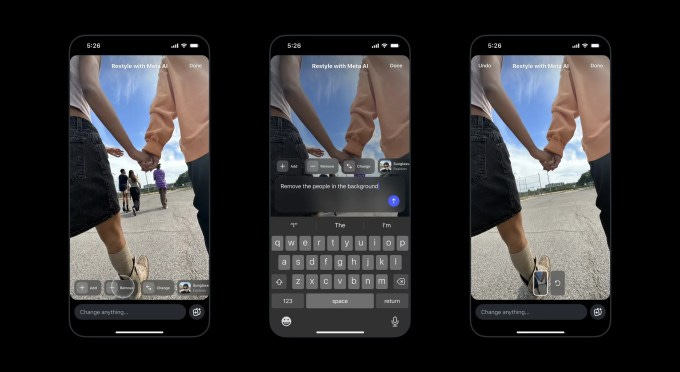
Instagram launched AI editing tools directly in Stories, letting users add, remove, or change things in photos and videos with text prompts
Pinterest has shipped a new set of toggles that allows users to toggle genAI features on and off. Users are able to decide on a category-by-category basis whether or not they want to see AI-generated content in their feed after the product was flooded with genAI content
Spotify has shipped its own filters to reduce or eliminate AI slop by identifying AI-generated songs and removing them from its recommendation engines
Google has updated its AI Studio to incorporate new vibe coding capabilities. You can now use Google Studio to incorporate generative AI models (Veo 3.1 Nano Banana), text-to-speech, and other models in one single interface.
Google expanded Earth AI with Geospatial Reasoning powered by Gemini, connecting weather forecasts, satellite imagery, and population maps to help organizations respond to disasters and environmental crises
YouTube has rolled out a “likeness detection” feature that flags videos using a creator’s face without permission, giving verified members of its Partner Program the ability to review and have takedowns of synthetic or altered clips
Amazon announced it’s developing AI-powered smart glasses for its delivery drivers. The glasses are designed to be completely hands-free, eliminating the need for drivers to constantly glance between their phone, packages, and surroundings
A widespread AWS outage disrupted major platforms, including Amazon, Alexa, Snapchat, and ChatGPT, affecting businesses for several hours on Monday. Traced to a DNS failure in the US-EAST-1 region, the issue exposes the risks of single-cloud dependency
Linear has released a new AI Agent for Slack, which will automatically create issues that are informed by your conversation’s context. E.g., if a colleague drops a message into a chat that describes something not working as expected, Linear’s bot will recognise it as a bug and create the necessary engineering tasks to fix it. Their CEO says that this is the “best feature the team ever created”
Alibaba launches AI chatbot service in renewed consumer push. Alibaba is rolling out a free text-and-voice chatbot inside Quark, powered by Qwen3 with stronger reasoning and execution. They’re also opening pre-sales for Quark AI Glasses
Samsung launched Galaxy XR, a mixed reality headset at $1,800, half the price of Apple’s Vision Pro. Developed in partnership with Google and Qualcomm, comes with conversational AI integration. Samsung also shared a roadmap for smart glasses

Airbnb introduces social features for travelers to connect, with customizable privacy settings. Enhanced search now suggests properties outside preferred criteria, and maps highlight attractions
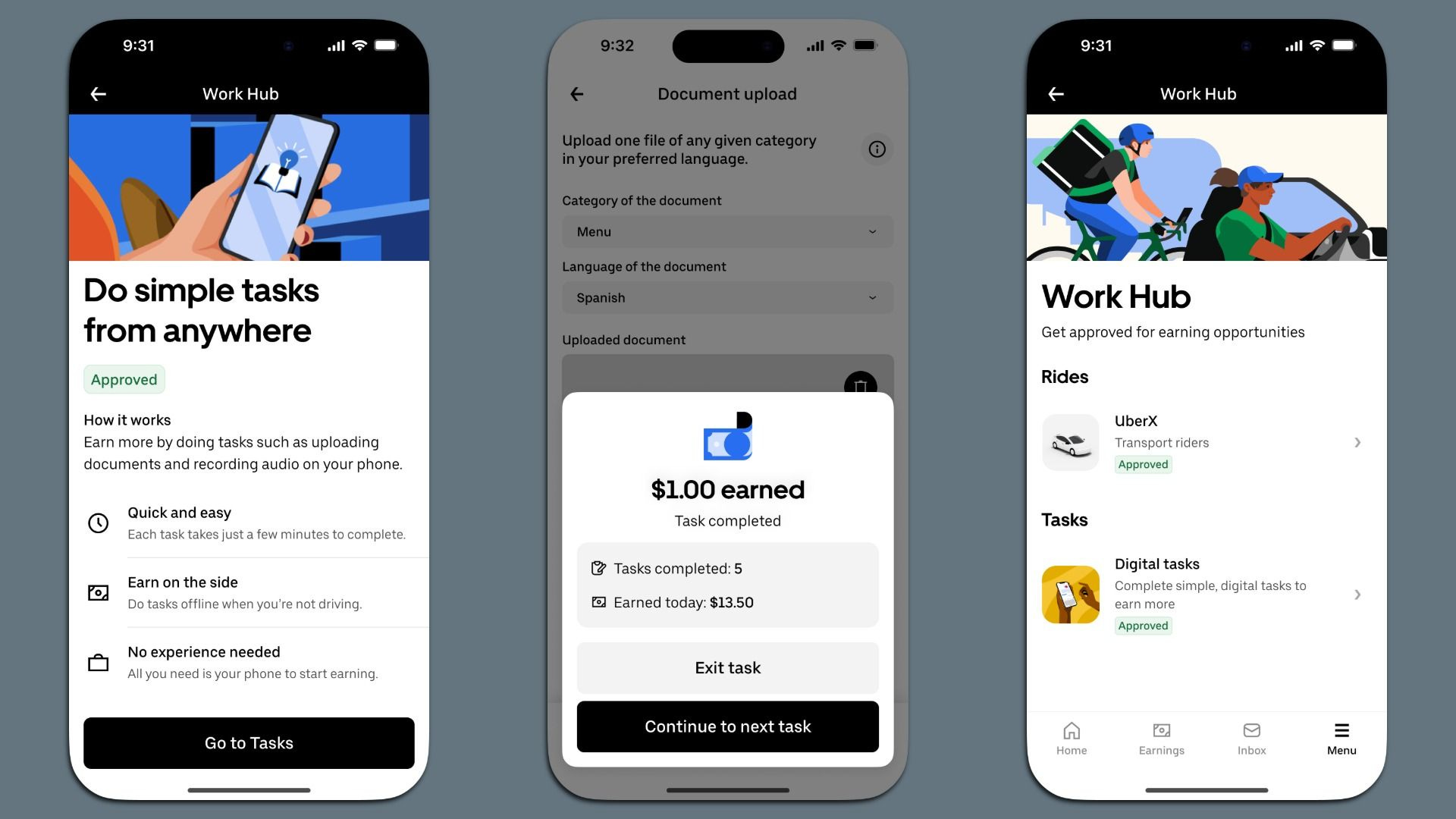
Uber launched a digital tasks program for drivers to earn extra income by completing online tasks to train AI models. Originating from a successful beta test in India, this initiative targets the growing $17B data labeling market by 2030
Coinbase expanded its Coinbase One Card to all U.S. users, offering Bitcoin rewards on everyday purchases, and also rolled out business payment tools to facilitate crypto transactions for enterprises
📚 Good reads
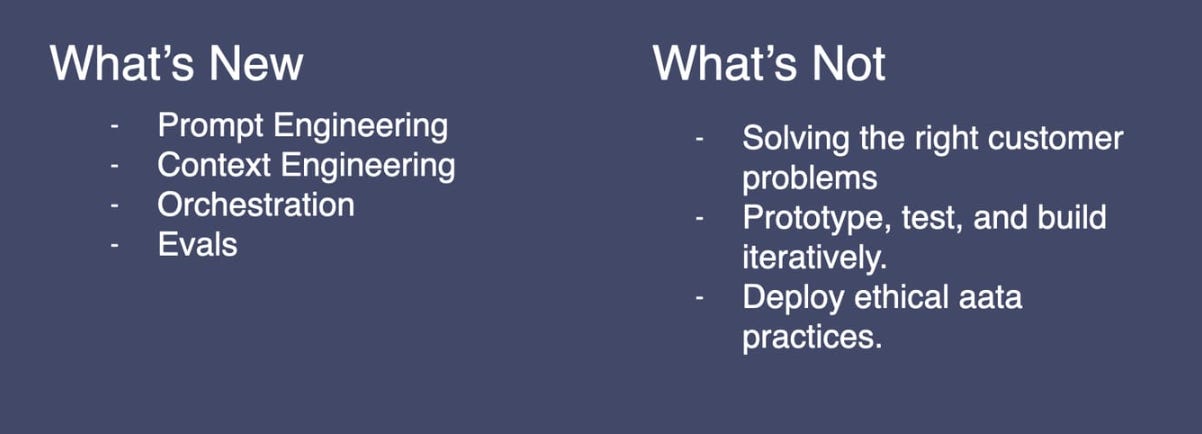
AI changes everything—and nothing at all. Teresa Torres argues PMs must pair new AI skills with timeless product rigor. She highlights prompt, context, orchestration, and evals - and why skipping discovery leads to shiny, wrong solutions
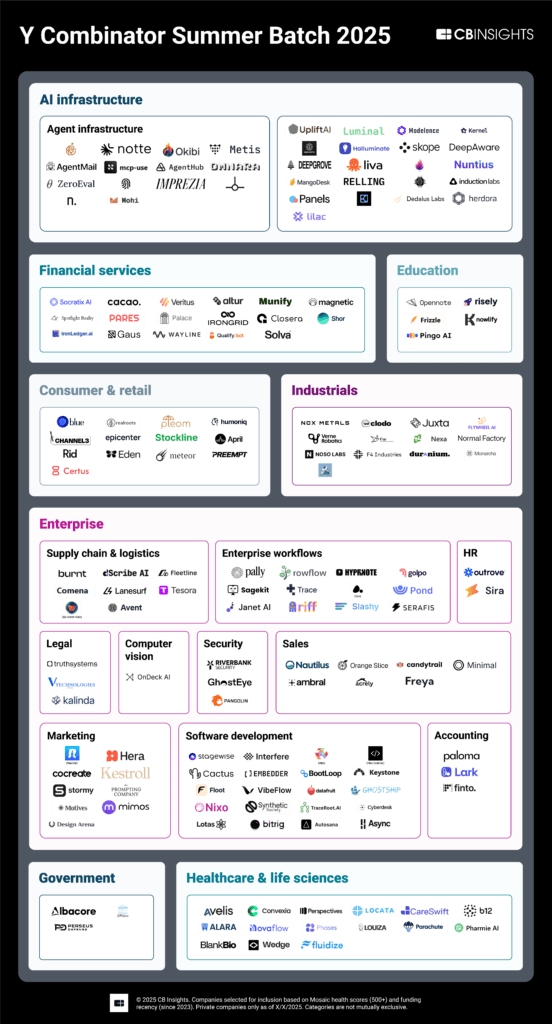
Y Combinator’s summer 2025: production-ready AI takes center stage. It’s always interesting to see what’s coming out of YC. Their latest batch leans hard into enterprise-grade AI, especially agents and infrastructure. Voice AI is moving into regulated use cases, and dev-focused agents go beyond code-gen into testing, debugging, and lifecycle management
Perplexity at Work: a 42 page guide to using AI at work and getting more done. Perplexity published a hands-on guide on how to use AI at work. The guide focuses on 3 different themes: focus for reclaiming your attention, amplification for integrating AI into your existing workflows, and outcomes for achieving concrete and recognised goals. The guide is Perplexity-specific, but the principles and ideas can be applied across other AI tools
AI browsers flip website strategy and monetization. The Neuron explains how AI-first browsers like Atlas, Edge Copilot, and Chrome Gemini push users to single, comprehensive “information hubs,” killing thin SEO pages and making dwell-time the new KPI. Publishers should consolidate into deep, structured hubs optimized for AI parsing and on-page chat, while browsers become ad gatekeepers with freemium tiers. Interesting times ahead
And AI browsers bring new type of vulnerabilities, where hidden screenshot text in Comet and visible page content in Fellou can hijack agent actions. Because assistants run with user auth, simple on‑page instructions can trigger cross‑site actions—e.g., in banks, email, cloud. Until architectures improve, better to keep agentic tasks isolated and only run with explicit user intent
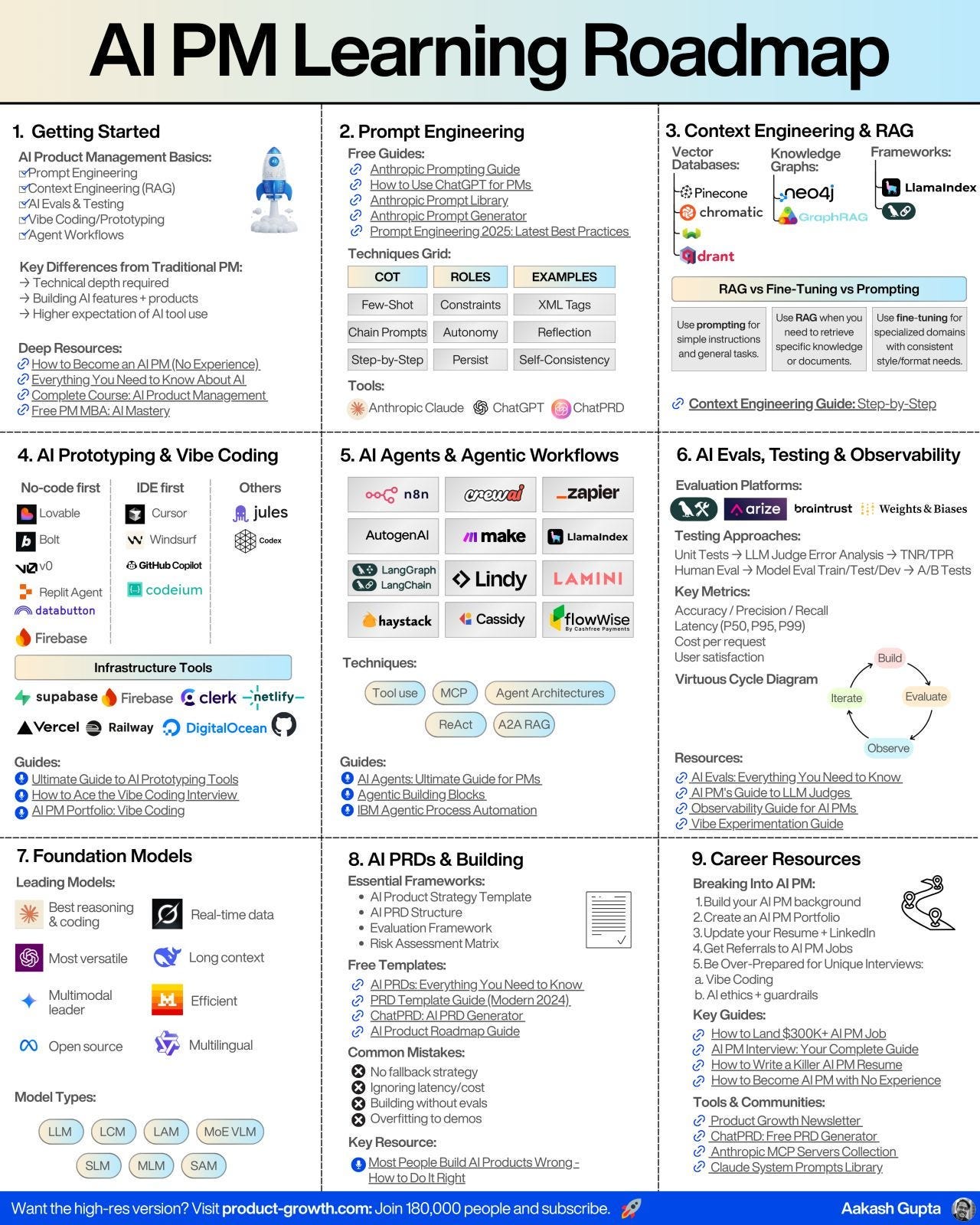
Free AI PM learning roadmap. Aakash Gupta shares a 12‑week plan curated with (mostly) free resources - you will still have to pay for some tools
That’s a wrap for this week! 🌟
I’d love to hear your thoughts on WIP. Reply to the email or drop a comment on Substack to share your take, and if you found this valuable, forward it to a fellow PM, Product enthusiast, startup founder, or entrepreneur who’d enjoy the read
More next week! 👋
Angel from WiP