Hi friends 👋
Welcome to another Week in Product!
🎰 The week in figures
$5T: Nvidia has become the first publicly traded company to reach a $5T market valuation, driven by surging demand for its AI chips and investor confidence in the continued growth of AI
$72B: Meta is spending $70-72B on AI infrastructure in 2025—a 93% jump from 2024—which will compress its free cash flow from $54B to around $20B as it bets big on outbuilding competitors
$1B: OpenAI laid groundwork for an IPO that could value the company at up to $1T, with plans to file as early as late 2026 or 2027 and raise at least $60B
$1B: Nvidia plans to invest up to $1B in AI coding startup Poolside, valuing it at $12B. It aims to enhance its capabilities, focusing on enterprise-grade AI solutions
$538M: Wealthsimple raised CA$750M (~$538M) to expand its suite of wealth management products across investing, spending, and credit, valuing the company at CA$10B (~$7.2B)
$350M: Mercor raised $350M at a $10B valuation to connect experts to AI companies that need their input to train and tune models. Generates more than $1.5M worth of gross revenue per day, making it a critical component of the larger AI landscape
$250M: Fireworks AI announced a $250M Series C round at a $4B valuation. Fireworks AI is an infrastructure platform focused on AI inference, the serving layer that runs genAI in production
$225M: SavvyMoney raised $225M to scale its financial wellness platform for credit unions, banks, and fintech companies
$200M: London-based AI video generation startup Synthesia has closed a $200M round that nearly doubles its valuation to $4B
14K: Amazon cut 14K corporate jobs (4% of its corporate workforce)
70%: Stablecoin payments have jumped 70% since the signing of the Genius Act in July, with B2B transactions accounting for two-thirds of activity and an average $250k transfer size
32%: Anthropic is apparently at 32% enterprise market share versus OpenAI’s 25%, which accounts for 80% of the company’s revenue
💵 Q3 earnings
Alphabet: Surpassed $100B in Q3 revenue on 35% Google Cloud growth & a $155B backlog. Plans to increase capex to $93B on AI infrastructure investments, strengthening its search business. Stock rose 4%
Amazon: Stock surged over 10% after strong Q3 earnings. AWS revenue grew 20.2% to $33B on AI demand and infrastructure investments, as AWS remains dominant in the cloud market
Apple: Hit record Q4 revenue of $102.5B driven by strong iPhone 17 sales and high Services revenue. Earnings rose 13%
Coinbase: Beat expectations with $1.50 p/share and $1.87B revenue. Institutional trading soared 122% to $236B fueled by regulation
Meta: Beat on Q3 revenue of $51.24B but stock dropped 8% due to projected $70-72B 2025 AI infra spend, long-term return concerns. Reality Labs reported a $4.4B loss in Q3, $70B+ since 2020
📰 What’s going on
AI browsers are shipping fast and opening huge new security holes. ChatGPT Atlas and Edge Copilot create invasive user profiles and are vulnerable to prompt injection and zero‑day exploits, so experts urge using AI features sparingly and only on trusted sites
OpenAI introduces Aardvark, a new GPT-5-powered cybersecurity researcher to assist security teams in identifying and then patching vulnerabilities
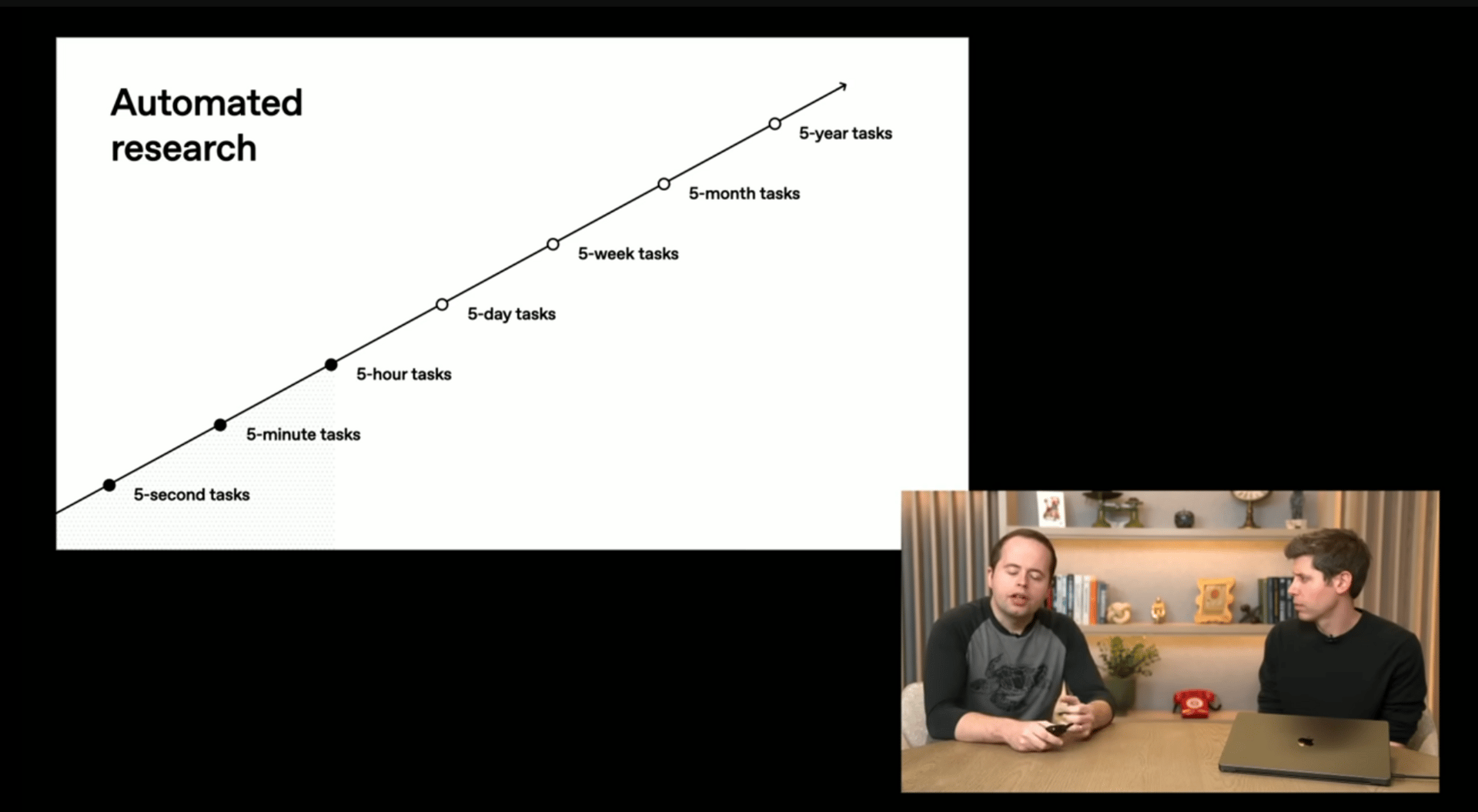
Sam Altman also hosted a livestream on how OpenAI is tracking toward building an intern-level research assistant by September 2026 and a fully automated “legitimate AI researcher” by 2028
Anthropic rolls out Claude AI for finance, and integrates with Excel to rival Microsoft Copilot
Apple announced a shift towards a multi-AI platform, beyond OpenAI, to position Siri to use the best models
Microsoft has launched two major new AI Agents for Copilot: App Builder and Workflows. App Builder agent lets users build workplace Apps in a few minutes and is grounded in Microsoft 365 products like Word, PowerPoint and Excel. Some of the examples suggested by Microsoft include an app for product launches and managing your career progress and goals. The workflows agent is designed to automate tasks like sending emails, reminders, and sharing team updates
Microsoft launches Windows 11 on Quest 3 for affordable mixed reality productivity
GitHub launched GitHub Agent HQ, which is described as a “single, unified workflow for developers to be able to orchestrate any agent, any time, anywhere”. In practical terms, this means engineers can now choose from multiple different models from Anthropic, OpenAI, Google and others, along with a new “mission control” feature, which is designed to manage and orchestrate the work
Cursor unveiled Cursor 2.0 - a reimagined version of the IDE that also introduces a new Agent-centric approach to software development. The release comes with a new frontier model called Composer that Cursor says is 4 times faster than other development models, and a new UI that abstracts away some of the finer details of the code, focusing on outcomes instead
Gemini can now create presentations for you. Once you’ve uploaded your source materials and prompted Gemini, it will create a set of Slides with a theme and relevant images. You can export presentations directly into Google Slides
Gemini for Home replaces Google Assistant on Nest devices and is now available to early entry users in the US. It enables more context-aware interactions across smart home functions
Chat in NotebookLM gets smarter with goals and a massive context window. It now runs on Gemini with an 8x bigger context window, 6x longer conversation memory, and 50% better responses for large-source analysis. You can set custom goals and roles (advisor, strategist, reviewer) to steer tone and output for different PM workflows. Saved chat history supports long-running projects while upgraded retrieval delivers deeper, more coherent synthesis from huge notebooks

Google Labs also revealed a new experimental product called Pomelli, which lets you scan your company’s website and produce marketing / promotional assets that match your brand colors exactly. Here’s a nice retro/perspective from Jaclyn Konzelmann, their Product Director: “Even within Google, sometimes we launch things that might have a few bumps at first. And that is entirely okay. More than anything, I want to make sure the team is fueled by this launch, not discouraged by it. It was a win”
Figma hosted its annual design systems conference, Schema, this week. One of the most useful announcements for product teams is “Figma Make Kits”. These kits let you import design files directly into Figma Make so that the prototypes you build match your product’s design system perfectly. It’s not yet officially released, but the beta is open for registration now
Figma acquired AI media generation startup Weavy for an undisclosed amount and will rebrand it as Figma Weave, bringing 20 people and multi-model image/video generation tools into its platform
Adobe shared a complete reinvention of its creative suite at its MAX conference. The new guiding principle = turn every app into a flexible conversation, where you can just tell Photoshop, Premiere, or Express what you want to do, then take over at any step when it’s faster to do things yourself. Adobe is building a central AI system branded under the Firefly name that connects everything. The new Photoshop AI Assistant lives in a side panel and can perform complex, multi-step tasks like “select the main subject, put it on a new layer, and replace the background with a futuristic cityscape.” It understands layers, edits non-destructively, and can even offer suggestions to improve your work. Other updates:
Firefly Video: A web-based video editor lets you generate clips, create custom transitions, and add AI-generated sound effects directly to a timeline (private beta atm; sign up here)
Firefly Audio: You can now generate royalty-free background music and AI voiceovers for any video clip with a single prompt, then use “Enhance Speech” to clean it up like a pro
Custom Models: This is a huge one. You can now train a private Firefly model on your own work. Just upload 10-30 of your images, and it will learn to generate new content in your unique style (wait list here)
Airbnb’s CEO says he won’t allow people to book accommodation through ChatGPT because he “didn’t think [ChatGPT] was quite ready.” He also said that ChatGPT will likely get access to Airbnb in the future, once the finer details of the underpinning tech are ironed out
Grammarly rebrands to ‘Superhuman,’ the name of the company it acquired in July, and launches a new AI assistant
PayPal becomes the first digital wallet integrated into ChatGPT, enabling purchases directly through the platform by 2026. This adds the Agentic Commerce Protocol to its existing option to use Google’s A2P protocol
PayPal also introduced Agentic Commerce Services, enabling merchants to accept payments via AI surfaces and integrate catalog and order management capabilities across conversational and automated shopping interfaces
Klarna introduced new Premium and Max membership tiers that bundled perks (cashback, travel, subscriptions) without requiring high‑cost credit
Elon Musk unveils Grokipedia, an A.I.-powered encyclopedia with over 800,000 entries. According to Musk, it’s aimed at countering Wikipedia biases and the control exercised by organized interest groups. We will see…
Alpha Arena, a benchmark designed to measure AI’s investing abilities with real capital. What happens when you give six AI models $10K each and tell them to trade crypto? Turns out, now there’s a website to find out exactly that
📚 Good reads
AI revives hopes for 4-day workweek. Zoom’s CEO predicts a three- to four-day workweek thanks to AI advancements in the coming years—including a “digital twin” his company is developing
Claude Code: what it is and why non‑technical folks should use it. Teresa Torres explains how running Claude in the terminal lets it read/write your local files, reuse context across tasks, and spin up parallel agents to make competitive research a repeatable system. Compared to browser, Projects, and Desktop (even with MCP), Claude Code wins on portability, automation, and owning your markdown data
Thinking is becoming a cognitive luxury. Anne-Laure Le Cunff breaks down the 3 “cognitive luxuries” eroded by phones, social media, and hustle culture: spaciousness, agency, and depth. The article offers practical micro‑habits for PMs: phone‑free zones, silent thinking walks, low‑stakes creative practice, and a cleaner information diet. Make sure to protect time and attention to think slowly, freely, and deeply
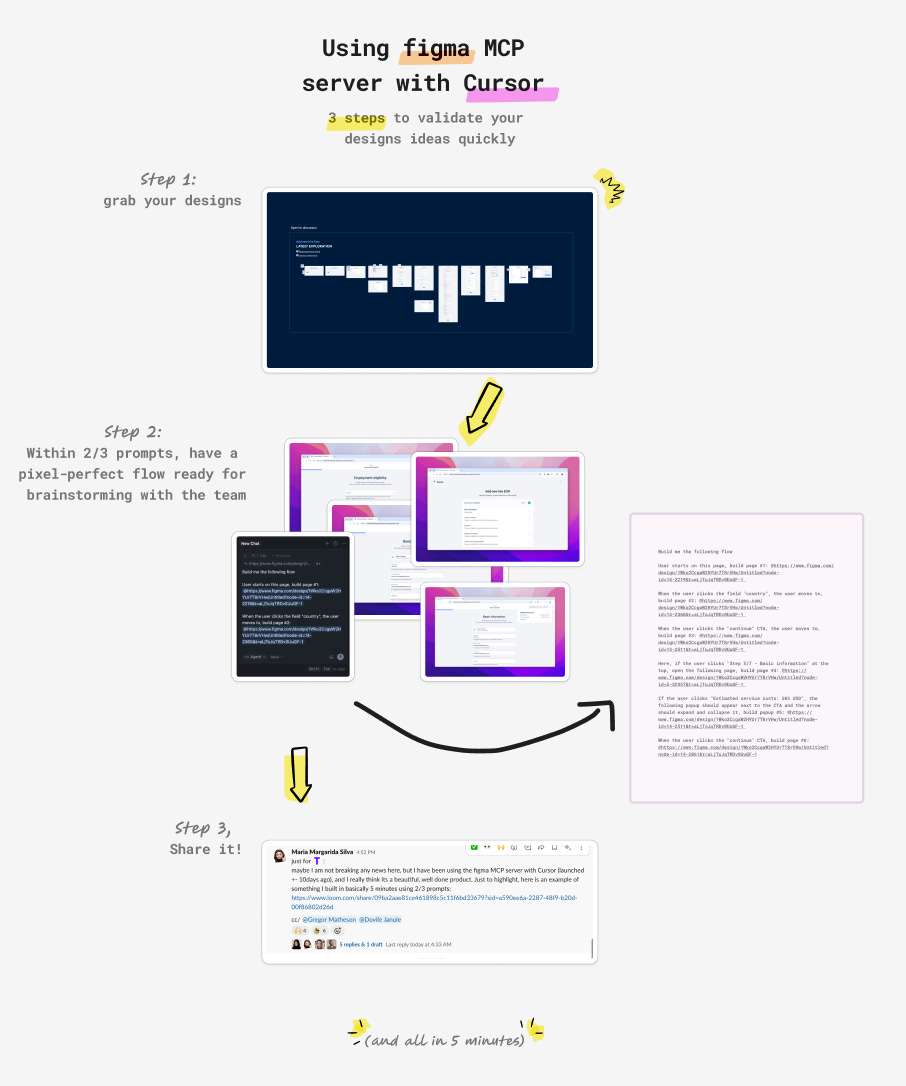
Enhancing Figma MCP Server with Cursor. Maria Margarida compares Cursor + Figma MCP to v0/Lovable, finding faster, near pixel-perfect flows from single prompts with minimal iteration. Her two quick examples show multi-page interactions and validations built in minutes, with minor follow-ups to polish UI behavior
How to build AI agents from scratch. Aakash Gupta breaks down what AI agents (LLMs that reason, act, and learn), and shares 8 practical steps to ship one fast
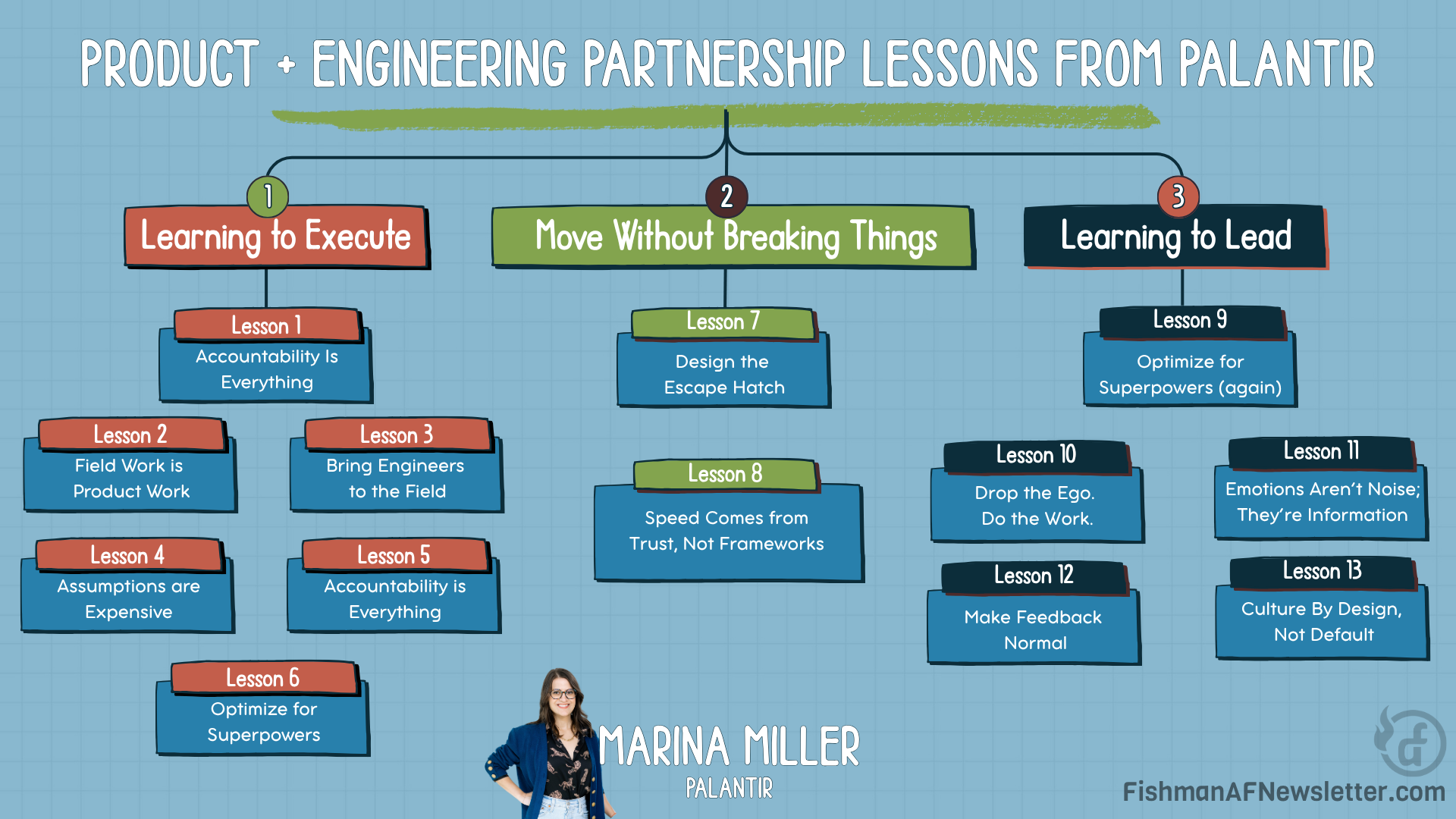
13 product-building lessons from Palantir. Marina Miller shares how accountability, embedded user observation, and trust (over process) help turn ideas into outcomes at Palantir
That’s a wrap for this week! 🌟
I’d love to hear your thoughts on WIP. Reply to the email or drop a comment on Substack to share your take, and if you found this valuable, forward it to a fellow PM, Product enthusiast, startup founder, or entrepreneur who’d enjoy the read
More next week! 👋
Angel