Hi friends 👋
Welcome to a new Week in Product!
🎰 The week in figures
$66B: Alibaba and Tencent lost $66B in market value in 24 hours after investors punished both companies for failing to explain how they'll make money from AI
$27B: Meta signed $27B deal with Nebius for AI infrastructure, part of $135B AI spending this year. Positions Meta to compete with OpenAI, Google
$1B: Chinese AI startup Moonshot aims to raise $1B, boosting valuation to $18B from $4.3B in 2025. Kimi models’ sales have outstripped last year's total revenue
$375M: Consumer-focused privacy company Cloaked raised $375M Series B. It currently has 350,000+ paying customers
$300M: Rivian teams with Uber on R2 SUV robotaxis with $300M initial investment. Deal potentially $1.25B, targets San Fran and Miami for 2028, 25 cities by 2031
$200M: Axiom Math raises $200M. The Silicon Valley startup, now valued at $1.6B, develops AI systems to verify computer code
73%: Anthropic captures 73% of new enterprise AI spend. Jumped from 50/50 split with OpenAI 10 weeks ago, driven by strength in AI coding tools; shift benefits Amazon, which runs most Anthropic inference workload
20%: Meta is reportedly considering layoffs that could affect 20% or more of its nearly 79,000-person workforce, with the cuts framed around offsetting aggressive AI spending
📰 What’s going on
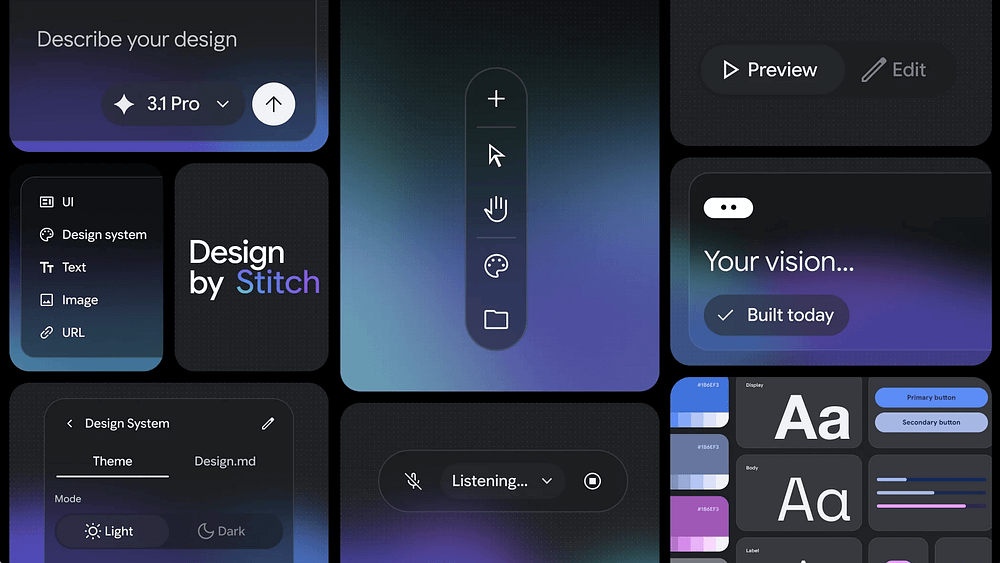
Google unveiled major updates to its AI design product, Stitch. A completely rebuilt canvas is now node-based, infinite, and multimodal. You can drop in images, PRDs, or existing code as raw material, and the AI reasons across all of it simultaneously. Pair that with the new Agent Manager (which lets you run multiple design directions in parallel), and the workflow starts to feel less like prompting a tool and more like briefing a team. The Design Agent itself has also gotten some upgrades, and it now understands the full context of your canvas. You can ask it to do things like generate a product brief from existing screens, adapt a desktop layout for mobile, or literally interview you to help define a new design direction. Another cool feature: Voice Design (”Vibe Design”) lets you talk to Stitch while it sees your canvas in real time
Besides Stitch, Google AI Studio also launched a completely rebuilt vibe-coding experience. Google’s Antigravity coding agent powers the new version and can go from prompt to deployed, live app. Google's head of AI Studio previewed a roadmap that includes Google Workspace integration, one-click deployment to Antigravity, and connecting to payment processors and live data sources
Gemini contextual assistant expands to all US users. Analyzes emails/calendar/photos for suggestions. Personal Intelligence is available in AI Mode in Search, the Gemini app, and Gemini in Chrome
Claude Code and Cowork get a new mobile app feature: Dispatch. Lets you assign Claude a task on your computer or in Code and then walk away. You pair your phone with your desktop, send Claude a task to complete from anywhere, and you come back to finished work. Everything runs in a local sandbox, your files stay on your machine, and you approve what Claude touches before it acts
Anthropic also released Claude Code channels (research preview), and it’s basically OpenClaude. You can now message your Claude Code session directly from your phone via Telegram or Discord, and it messages you back
OpenAI merges ChatGPT, browser, and Codex into a desktop super app
OpenAI launches GPT-5.4 mini and nano: Mini runs 2x faster than GPT-5 mini while approaching full GPT-5.4 performance on coding benchmarks, priced at $0.75/1M input tokens; nano costs just $0.20/1M input tokens for classification and data extraction tasks
OpenAI shifting resources to coding. At an all-hands OpenAI confab this week, Fidji Simo announced that the company plans to cut back on “side quests” and distractions in order to nail “productivity in general,” and particularly “productivity on the business front.” That means a full court press on coding and enterprise applications for the company’s frontier models, as they attempt to keep pace with the runaway success of products like OpenClaw, not to mention Claude Code and Cowork
Perplexity has launched the mobile version of its AI browser, Comet. Perplexity is positioning it as an AI Assistant that will work across multiple tabs at once
Spotify has introduced a new beta feature called Taste Profile. The new feature aggregates your listening data across music, podcasts, and audiobooks into a visible profile that includes key data points like preferred artists, genres, daily habits (e.g., upbeat workout tracks in the morning or news podcasts during commutes), and emerging interests. Users can review how Spotify currently understands their Taste profile, and if something feels off, they can flag inaccuracies
Moltbook shifts liability to humans after Meta acquisition. New terms require operators over 13, make humans solely responsible for agent actions, and add disclaimers advising against reliance on AI-generated content for decisions
Meta is shutting down its flagship metaverse product, Horizon Worlds, after admitting that metaverse VR worlds don’t have product-market fit
Shopify preps for agentic shopping takeover. President Harley Finkelstein says AI agents will act as merit-based personal shoppers, surfacing long-tail merchants and bringing context to product discovery beyond mass retailers
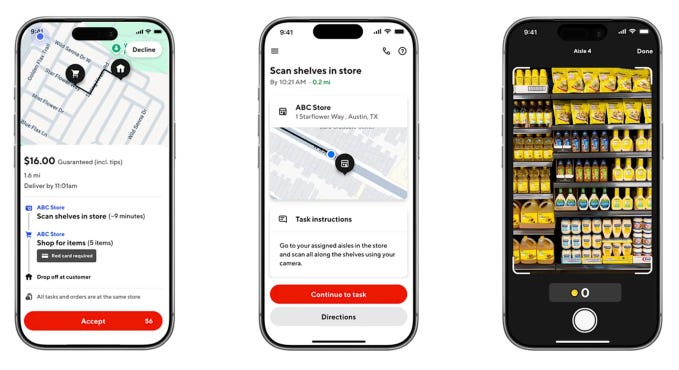
DoorDash launches “Tasks” app, allowing couriers to earn money as they film themselves completing various kinds of everyday activities and chores to train AI (e.g., washing dishes, or speaking in a foreign language). The videos will help train internal DoorDash AI models, but they may also get licensed to third-parties in the retail, insurance, hospitality, and technology sectors
Elon Musk announced Grok 4.20 beta, claiming the lowest hallucination rate ever recorded at 22% and top marks in instruction following
Runway released a research preview of a real-time video model (time-to-first-frame under 100 milliseconds, HD) running on NVIDIA Vera Rubin, unlocking interactive creative workflows
Alibaba is set to release an enterprise AI agent based on its Qwen model as soon as this week, with plans to integrate it with Taobao and Alipay
📚 Good reads
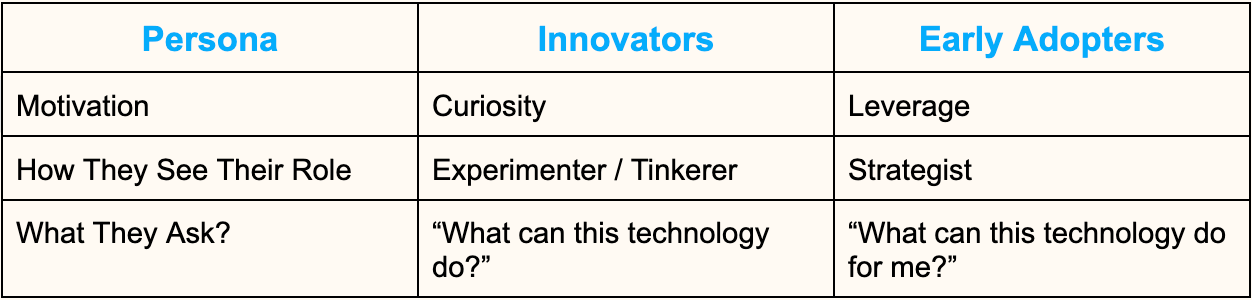
The AI signal to noise curve. Online chatter makes it feel like AI tools and models get outdated every week. FOMO is real here. What really matters is deciding whether you should be an innovator, early adopter, or just wait for the early majority phase in each area. Casey Winters argues you only need to go deep on AI where your job truly demands it (e.g. vision-setting or selling AI products), and can safely ignore most experiments elsewhere until they get easier and more valuable
Retention tactics in the GenAI era. Elena Verna shares 5 tested tactics from Lovable: hidden lite plans, in-app payment failure prompts, daily free credits, rollover policies, and top-ups
Uber’s engineering AI adoption. It’s fascinating to see how different orgs are embracing AI workflows (with different success rates). Uber seems to be doing well, with 84% of AI users now delegating coding tasks instead of just “accepting suggestions”. Their internal background coding agent already generates 1,800 code changes per week (8% of all changes), with engineers acting more as architects and reviewers than code authors
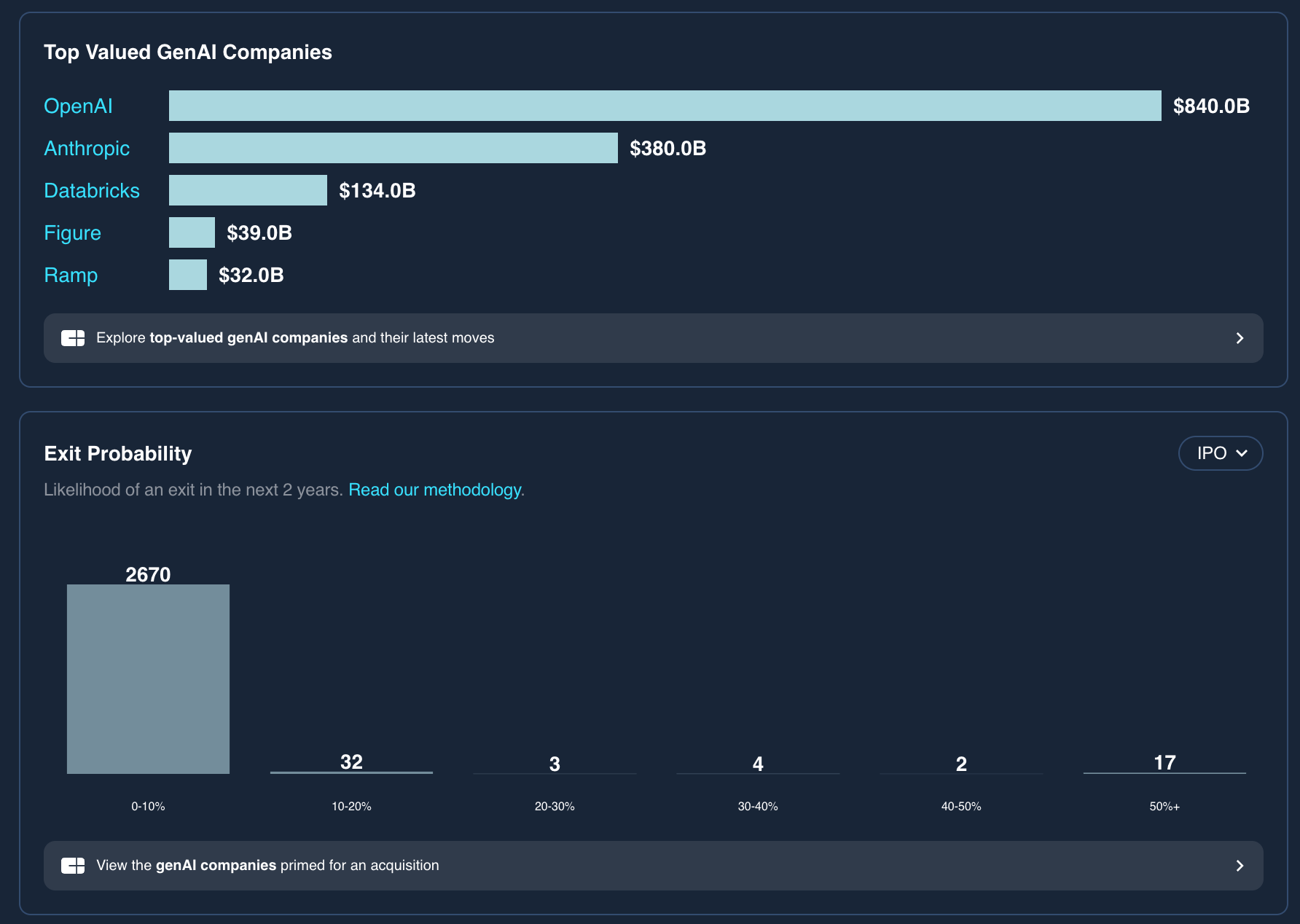
CB Insights’ new genAI signal tracker gives a live view into where money, deals, and valuations are surging in genAI. It uses a proprietary core, commercial maturity, and exit probability to flag fast-rising companies and markets. You also get a near real-time deal feed, the biggest recent rounds, and top investors, so you can spot partner/competitor moves and emerging product spaces before they feel obvious. It’s interactive, so you can drill down and explore on different categories
🎧 Good listen/watch
Natural language as a UI, and how to manage feature release velocity. Jenny’s career spans Dropbox Paper, FigJam at Figma, and now leading design for Claude Cowork at Anthropic. In this podcast, she dives into what it means to design an AI product at scale, where flows are non-deterministic, use cases are endless, and the model you’re designing for today might make your work obsolete tomorrow. She talks through the story behind Cowork, the unsolved problem of educating users about AI capabilities, and why shipping is now the most underrated design skill. Plus, a live demo of her own design process using Cowork
Figma’s continuous design↔code loop. The Figma team explains how Claude Code and MCPs turn live production UIs into editable Figma frames, and back into shipping code. It also breaks down LinkedIn editor Daniel Roth’s “dueling agents” setup: one AI writes iOS app code, another reviews it. Lots of useful workflows for PMs!
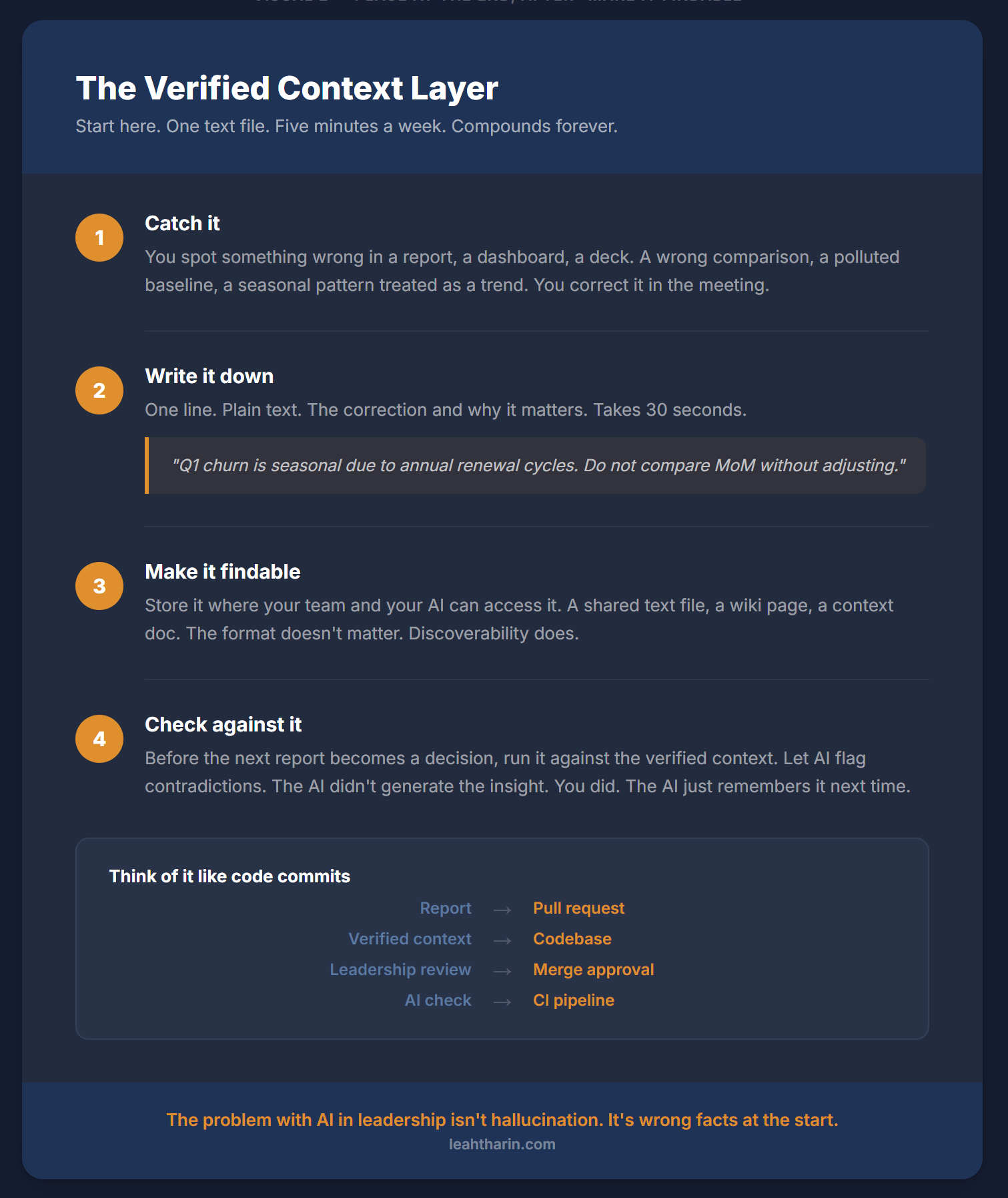
Teach AI to catch what teams keep missing. While teams obsess over perfect data retrieval, Leah Tharin argues the risk is “wrong facts” that slip in without context (e.g. bot traffic inflating your baselines). She shows how tiny, boring habits (leaders writing down one-line corrections in plain text) let AI act like a CI pipeline for decisions, catching bad assumptions before they ship
The rise of the full-stack builder (transcript). Former LinkedIn CPO Tomer Cohen and PM coach Ben Erez explain how AI is collapsing product org processes into leaner “full‑stack builder” teams that can take ideas from insight to in‑market fast. They argue that while AI will automate many specialist tasks, the leverage for PMs is doubling down on human skills like vision, empathy, communication, creativity, and especially judgment. Their advice: stop clinging to titles, lean into AI literacy, and actively blur functional lines to future‑proof your career staying in the top tier of builders
🧑💻 Worth learning
OpenClaw for PMs. Aakash Gupta walks through installing OpenClaw, wiring it into Slack, and using a local workspace to give it memory and control over your files. He also shows 5 concrete PM workflows it can automate: Slack knowledge base, stand-up summaries, competitive intel, VOC reports, and tier-based bug routing. My advice (not Aakash’s): make sure you know what you do with OpenClaw. You need to treat security and deployment seriously because it has shell-level access and can easily get wild
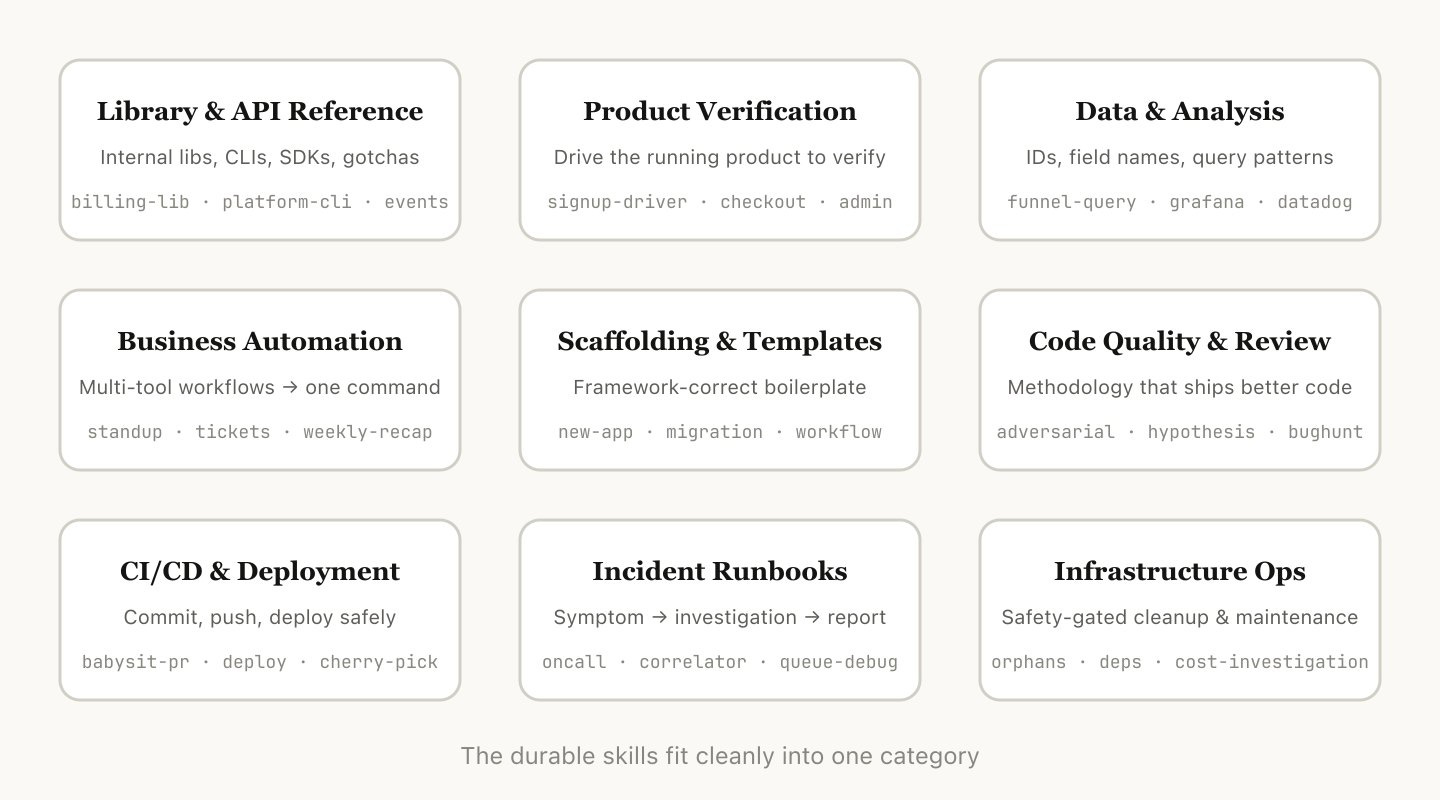
How Anthropic uses Claude Skills internally. A Claude Code engineer shares his guide to turning Claude Code from a “nice coding assistant” into a productivity engine by designing the right skills. The guide includes living folders of scripts, gotchas, verification flows, and org‑specific workflows that let the model test, deploy, debug, and even remember past work
🔧 Products to try
Claude Cowork now dispatches tasks from your phone or desktop in one continuous conversation that picks up where you left off; assign Claude a task, walk away, and come back to finished work (early research preview); free to try
Banana App lets you make real-time voice calls in 80+ languages, preserving your natural tone and emotion, with the first minute of every call free and no subscription required; only Android for now
HTMLPub turns any prompt or pasted HTML into a fully published live website in seconds with custom domains, built-in forms, payments, analytics, and AI chat editing; free to try
That’s a wrap for this week!
Feel free to drop your comments/questions/feedback. Would love to hear what you’d like to see more about in WiP, so I can make it better for you.
Have a great weekend.