

Hi friends 👋
Welcome to a new Week in Product!
🎰 The week in figures
$10B: Jeff Bezos’ aerospace venture, Blue Origin, is raising $10B in its first-ever outside financing round, establishing a pre-money valuation of $130B
$3B: Crusoe, the AI cloud firm, is negotiating a $3B raise at a $30B valuation
$300M: Lovable in talks to raise $300M, nearly doubling its valuation to $13.2B, supported by $500M ARR, in a 146-person team
$130M: Prime Intellect, the San Francisco cognitive computing startup, hits unicorn status after $130M Series A at $1B+ valuation
$120M: Norm, the legal AI startup, raised an additional $120M, also hitting unicorn status at a valuation of $1.2B
23M: Reddit said its AI-assisted defenses block 23M spam views per day and revoke nearly 2M fake votes daily
4.8K: Microsoft has laid off approximately 4,800 employees, representing 2.1% of its global workforce, with Xbox and commercial sales bearing the heaviest impact. The cuts come as the company redirects resources toward its newly launched $2.5B Frontier Company AI business unit
📰 What’s going on
Apple sues OpenAI over trade secrets. This one is pretty wild. Apple filed a lawsuit against OpenAI this week accusing them of systematically stealing trade secrets to build their upcoming hardware device. The complaint names two ex-Apple people: Chang Liu, a former senior engineer who allegedly kept his Apple laptop and downloaded dozens of confidential files while already working at OpenAI, and Tang Tan, now OpenAI’s hardware chief, who allegedly asked Apple candidates to bring “actual parts” (batteries, logic boards) to interviews. For context, over 400 former Apple employees now work at OpenAI, and the io acquisition ($6.4B, with Jony Ive) made it clear OpenAI is coming for consumer hardware. What makes it extra-awkward is that ChatGPT is still integrated into the iPhone
Claude Cowork expands to mobile and web for Max subscribers. Anthropic's general knowledge work agent now runs tasks in the background across devices; 33.4% of usage goes to business process operating, while coding accounts for just 8.7%
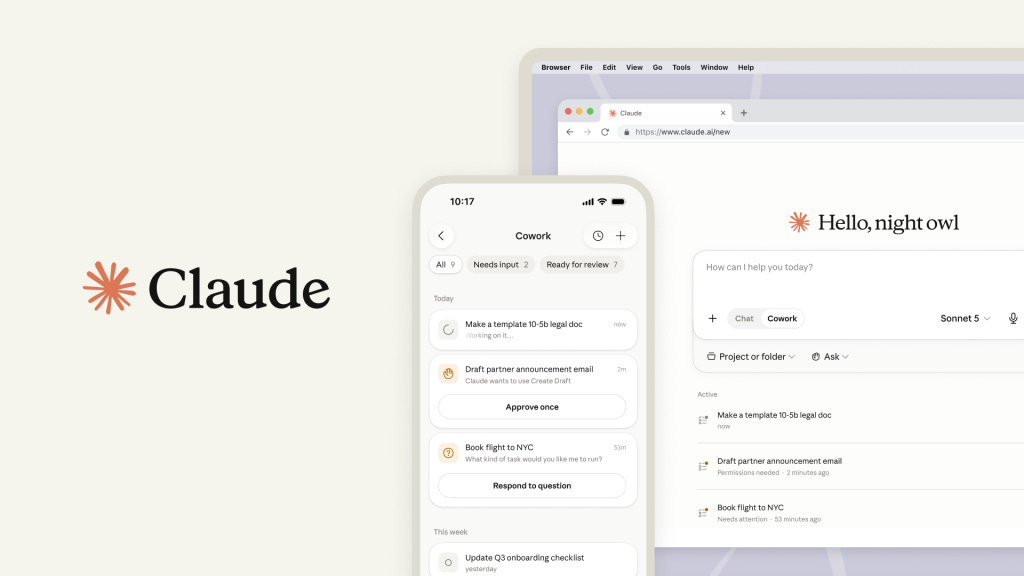
Anthropic launches Reflect to track your AI usage. A new Claude dashboard visualizes conversation topics, usage patterns, and task types, while prompting users to set quiet hours and consider what tasks should stay human
OpenAI officially launched GPT-5.6, which comes in Sol, Terra, and Luna: think of them like most powerful, balanced, and affordable. Sol’s Ultra mode coordinates multiple agents on harder jobs.
OpenAI launches GPT-Live-1 voice models for real-time conversation. New full-duplex models can speak and listen simultaneously, handle natural interruptions, and connect to GPT-5.5 for search and reasoning while maintaining conversation
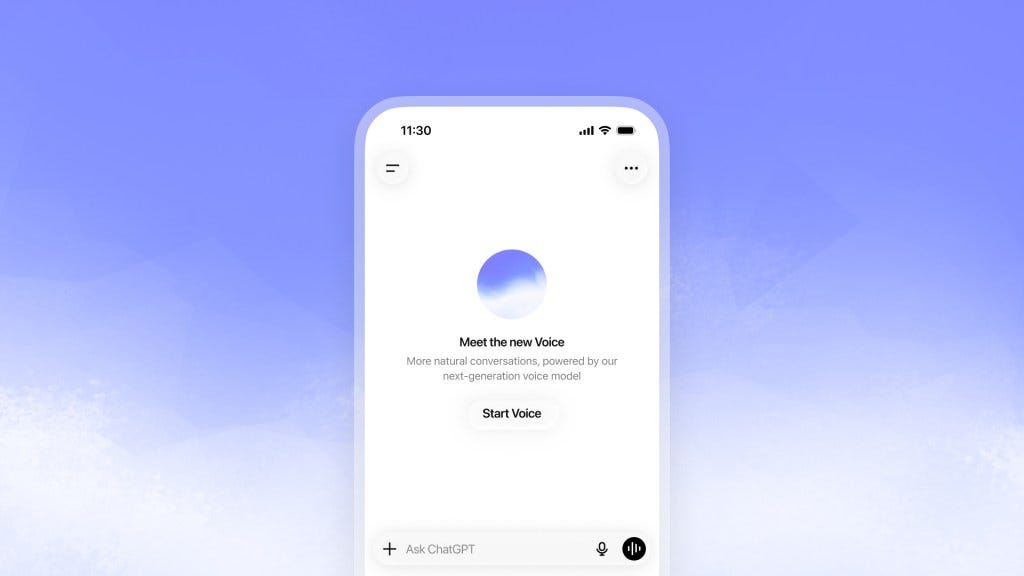
OpenAI launches ChatGPT Work. OpenAI has reconfigured Codex and ChatGPT into a new agentic tool called ChatGPT Work. As with Claude Cowork, ChatGPT Work is designed to plan and execute multi-step tasks autonomously, with an eye toward serving both engineers and also non-technical folks
Perplexity tests Teammate coding assistant to challenge Anthropic and OpenAI. The AI search startup's internal engineering tool handles full project lifecycles from planning to monitoring, with integration planned for its Comet AI browser
Microsoft is reportedly replacing some OpenAI and Anthropic model calls with in-house MAI models in Copilot apps such as Excel and Outlook
Meta released Muse Spark 1.1 through the new public Meta Model API, with 1M-token context, tool and computer use, coding gains, multimodal reasoning, and pricing pressure on OpenAI and Anthropic
Meta has launched Muse Image, a free AI image generator built by Meta Superintelligence Labs. The tool is now available through the Meta AI app, Instagram Stories, and WhatsApp, allowing users to create images, edit photos, and generate custom visuals for ads or social sharing
Meta is reportedly testing AI glasses that capture a wearer's surroundings with cameras and audio, pulling its hardware push into another privacy debate
Meta bans engineers from using Claude Code and OpenAI Codex. The company's Applied AI division prohibited rival coding tools to prevent "model distillation," after internal tracking showed 60 trillion tokens consumed in a single 30-day period
xAI rebrands to SpaceXAI following February acquisition
SpaceXAI has released Grok 4.5, its first major model since going public, with Elon Musk claiming it matches Anthropic’s Opus-class performance at significantly lower cost and faster speeds
Slack connects Slackbot to full Salesforce platform via MCP. The integration lets users pull CRM data, generate Tableau visualizations, and trigger DocuSign approvals from chat messages
JADEPUFFER was identified as the first documented ransomware operation conducted entirely by a large language model agent.
China considers restricting overseas access to top AI models. Beijing held meetings with Alibaba, ByteDance, and Z.ai about limiting access to advanced Chinese AI systems and toughening penalties for AI theft under national security law. Also, Alibaba reportedly banned employees from using Claude Code
Klarna applies to become a bank, in its latest push to become a full consumer bank rather than a BNPL brand
Visa launched Visa Destinations, a mobile-first travel platform offering cardholders curated experiences, city guides, and perks across 10 markets
📚 Good reads
State of AI. CB Insights shares real-time global data and intelligence on dealmaking, funding, and exits with this addictive interactive dashboard
AI labs flee the commodity trap by climbing up the stack. Selling raw model inference is a terrible long‑term business. Models look similar, switching is easy, and competition will grind token prices toward marginal cost. To survive, labs are racing “up the stack” into products, AI-native SaaS, and embedded “digital workers,” importing classic enterprise-software moats like switching costs, ecosystems, contracts, and behavioral lock‑in. Complement with this NYT investigation on Mercor, Scale and Handshake, who are paying highly educated professionals to turn their own expertise into training data that may eventually automate their roles
False confidence is AI’s real business risk. Leah Tharin on how LLMs can massively amplify confidently wrong decisions, especially when leaders skip research, misuse data, or outsource strategy to AI. She suggests re‑establishing trust by demanding verification, clear sourcing, visible “how I worked,” and shared reviews of critical data and experiments. Don’t just produce more docs with AI; design feedback loops and guardrails that stop confidently incorrect people (including you) from steering the business off a cliff
🎧 Good listen/watch
[Video/podcast] GPT-5.6 vs Claude Fable 5: practical head-to-head for builders. Peter Yang tests both models across 6 use cases, including front-end site generation, video clipping, app feature planning, or advising. Fable seems to have an edge on rich UI and some long-term reasoning, but GPT‑5.6 wins hard on browser/computer use, reliability, and cost. He suggests PMs: if you pick one daily driver for building and running workflows, go with GPT‑5.6; use Fable as an optional “planner/designer” upgrade when you can afford both
[Video/podcast] The PM’s guide to AI design that isn’t slop. Aakash Gupta and Meng To explain how to give the right setup to Codex for design work. They walk through a practical workflow (plan with context, generate designs with the taste layer, and steer mid-flow) to avoid shipping off-brand AI-generated UI. You can almost consider AI like a junior designer if you have a well-structured system
🧑💻 Worth learning
Harness engineering for smarter, self-improving AI agents. Lilian Weng explains how AI progress now depends as much on the harness around models as on model weights themselves: workflows, memory, tools, evaluation, permissioning… She shows emerging patterns like workflow automation, file-system-based memory, sub-agents, and evolutionary search that let agents debug, rewrite, or even redesign their own scaffolding. Complement with Claire Vo’s recent podcast explaining how to build a custom “harness” that wraps LLMs (using Claude Agent SDK) to automate a specific, repetitive workflow
🔧 Products to try
Claude for Open Source gives eligible open-source maintainers and contributors six months of Claude Max access; free for six months if eligible
Willow Frontier Mini gives you unlimited voice dictation for turning speech into text, while Frontier Pro targets faster and more accurate team workflows; Mini is free
That’s all for this week.
Feel free to drop your comments/questions/feedback. Would love to hear what you’d like to see more about in WiP, so I can make it better for you.
Have a great start to your week!
