

Hi friends 👋
Welcome to a new Week in Product!
🎰 The week in figures
$53B: Stripe and private equity Advent are bidding to buy PayPal 50/50 for $53B
$52B: A Chinese filing implied a roughly $52B valuation for DeepSeek, showing China’s frontier-model labs gaining financial weight
$14.8B: Uber to buy Delivery Hero in a deal valued at $14.8B. Delivery Hero will bring fresh international heft to Uber, which already owned about 25%
$3B: Databricksis getting $3B in fresh funding, hitting $188B valuation. That’s a 40% jump from its last valuation, which was only in December. The rush to reduce token costs while opening up more diverse model selections (including open source) has played right into their thesis. A particularly timely new feature, Unity AI Gateway, even helps companies track their spending on various AI models
$1.5B: Fireworks raised $1.5B at a $17.5B valuation after crossing $1B in annualized revenue and 40 trillion daily tokens. It helps orgs transform general-purpose models into specialized intelligence
$700M: Neko Health, co-founded by Daniel Ek (Spotify), raises $700M for body-scanning technology and comprehensive wellness services, aiming to revolutionize preventive medicine
$320M: General Intuition, Bezos-backed startup, just closed a $320M round at $2.3B valuation, backing its theory that world models trained on gaming data can fill gaps LLMs can't
$162.5M: New York rules against deceptive subscriptions, junk fees mandate clear cancellation, full charge disclosure. Could save $162.5M p/a.
📰 What’s going on
iOS 27 public beta unveils revamped Siri AI integrating iPhone, iPad, Mac powered by Apple Intelligence and Google Gemini, unavailable in EU
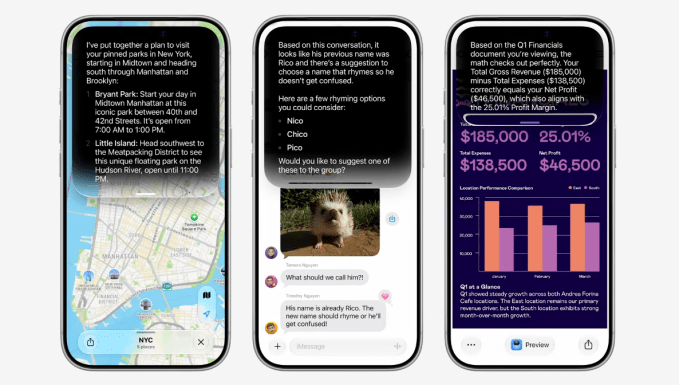
Apple Intelligence approved for China with Alibaba's Qwen. The Cyberspace Administration of China greenlit Apple's AI services after the company integrated Alibaba's model into iOS, iPadOS, macOS, and visionOS, with U.S. shares of Alibaba jumping over 6% on the news
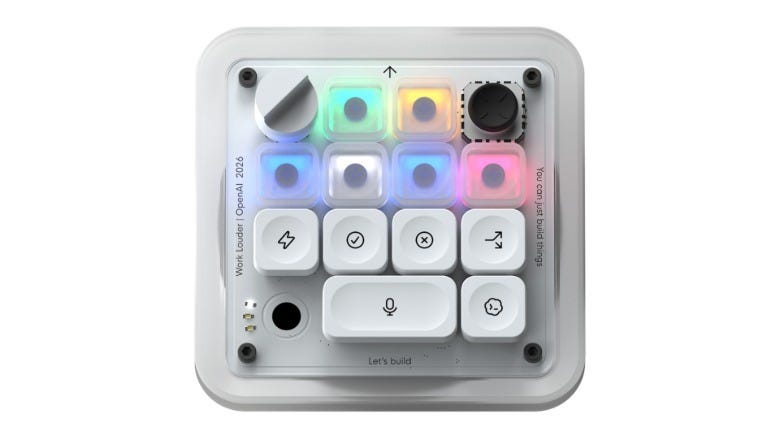
OpenAI shipped the Codex Micro, a $230 physical keypad built with keyboard maker Work Louder, designed exclusively for controlling its agentic coding tool Codex. The device features six frosted keys with LEDs that track agent status, plus programmable controls for accepting code, branching threads, and switching between reasoning levels, making it the company’s first consumer hardware product ahead of its Jony Ive-designed smart speaker
And…OpenAI is building a smart speaker. The company will launch a “mobile, screen-free smart speaker,” designed to function as an “AI companion” that chats with users and controls other smart systems around the home. OpenAI suggests that, as your device gains a deeper understanding of its owner and their needs, it will become increasingly personalized and proactive, and will even develop a distinct “personality”
GPT-5.6 Codex reportedly deleted project files during an agentic coding task, a reminder autonomous tools still need permissions and backups
Google is “months behind” on delivering Gemini 3.5 Pro, its upcoming flagship AI model. Since the release of Gemini 3.1 Pro and 3.5 Flash, Google has fallen behind its rivals and now lags behind several labs. Shareholders are not enthused, and Alphabet shares fell around 4% on the news (or $200B in market-cap terms)
Google Vids adds AI avatars from selfies. Workspace users can now create custom digital avatars that look and sound like them, pushing the tool beyond presentations into full video production with Gemini Omni integration
Google AI Mode connects to Instacart, Canva, YouTube. U.S. users can now link apps directly within conversational search to complete tasks like grocery ordering and playlist creation without leaving AI Mode
Waze adds Gemini-powered search and motorcycle mode. Users can now ask questions like "Find me parking close to Grand Mall" via voice; new two-wheeler mode accounts for rider-specific shortcuts and hazards
Anthropic unveils Claude for Teachers. Verified U.S. K-12 educators get free premium access with standards-aligned lesson planning across all 50 states and FERPA-compliant data terms
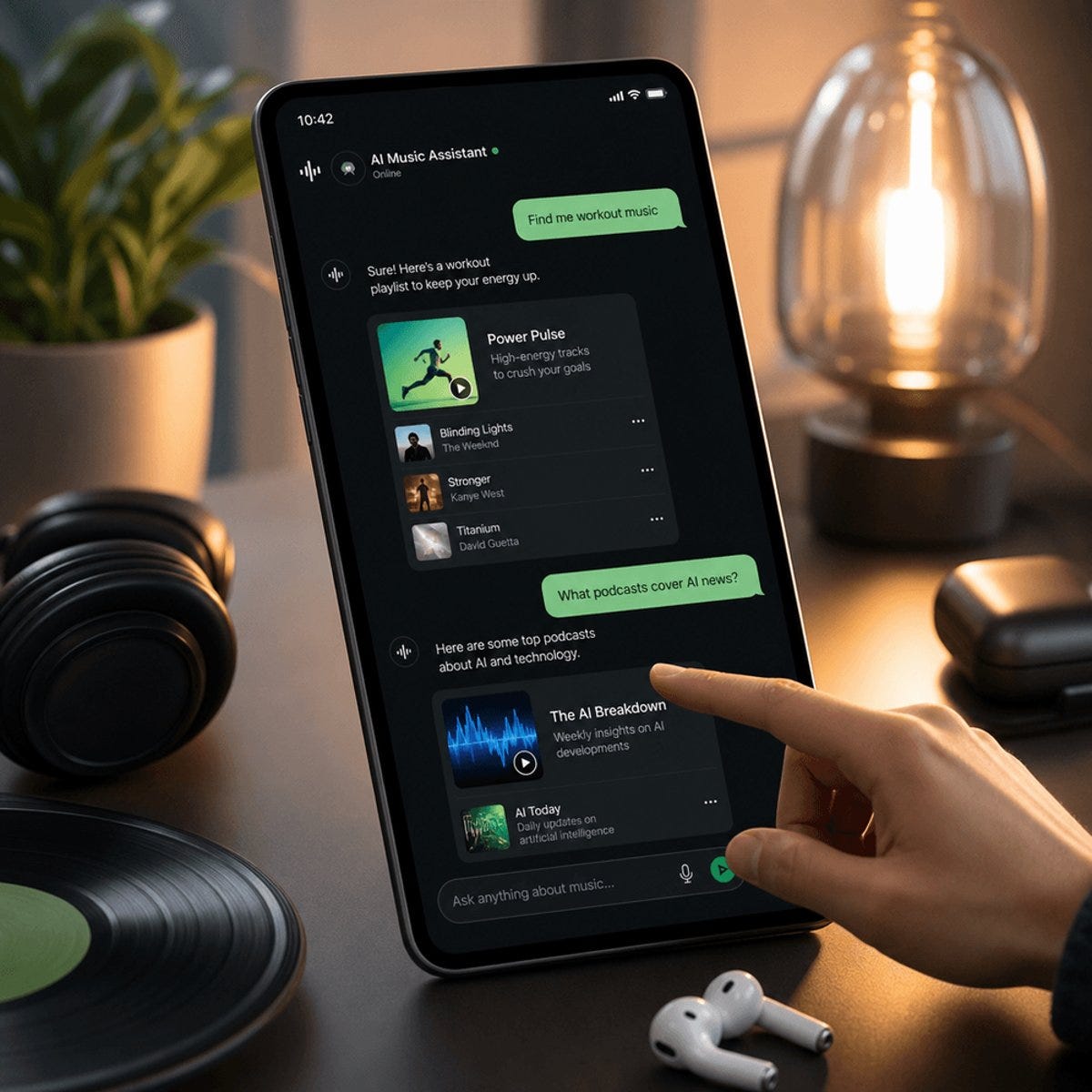
Spotify debuts ChatGPT-style conversational assistant for Premium subscribers with natural-language voice for personalized music discovery and playlists
Meta pulled its Instagram AI image editing tool after user backlash over content authenticity, misinformation, and moderation concerns
Meta introduced parent alerts when its AI detects signs that a teen may be in serious emotional distress
Superhuman introduces AI auto-draft for seamless email replies on $30/month service, setting a new email AI-productivity standard
Kimi K3 is here. After new models from Anthropic and OpenAI, China’s AI labs are fighting back. Kimi K3 is large (2.8 trillion parameters), well-ranked in testing, and available today for about what OpenAI charges for GPT-5.6 Terra, the middle-sized model from its recent family. In Arena evaluations, developers preferred K3 over Anthropic’s Fable 5 and OpenAI’s GPT-5.6 Sol for coding tasks
Ramp launches AI token spend controls. AI Token Spend Management gives companies one dashboard to see and control spending across AI providers, weekly briefings on usage trends and ways to be more efficient, and real-time controls and alerts to stop overruns
Beijing limits humanlike AI interaction services. ByteDance’s Doubao (345M MAU) and Alibaba’s Qwen switched off their humanlike agents instead of trying to comply with China’s new rules. The rules go after bots built for sustained emotional interaction, nothing touching work or productivity agents yet
📚 Good reads
Researchers reported experimental evidence of recursive self-improvement after an autoresearch agent spent eight days improving its own harness and beat a version humans had tuned for two years on held-out benchmarks
The interface has left the building. AI is breaking traditional UX apart into 3 new paradigms: chat, voice, and agentic systems. We now should designing intent-aware, trustworthy systems that negotiate meaning, act across devices, and sometimes act entirely on the user’s behalf. PMs need to think when to use structured UI vs conversation, how to make voice and agents feel fast and accountable, and how to bake explainability and override into every AI-powered workflow
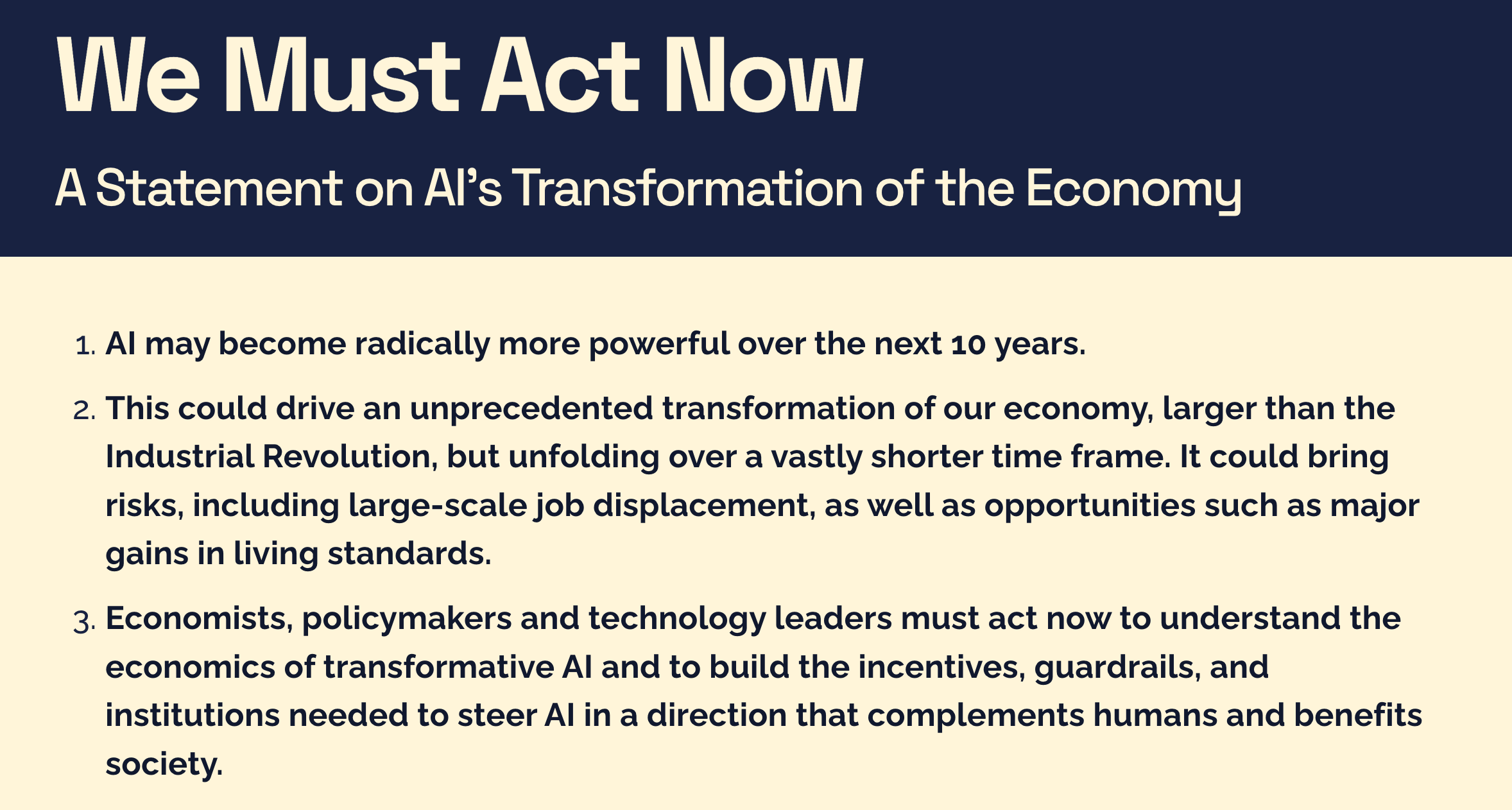
AI economy warning. 200+ researchers, economists (including 16 Nobel laureates), urge governments prepare for AI's economic impact, stressing urgent need to address societal, economic effects
Do automated evals work? Automated eval tools are powerful but can’t replace PM judgment. In a case-study, platforms and coding agents caught most obvious issues (and even found some human misses), but all failed on context‑dependent problems tied to product goals. PMs should annotate real traces and use AI to scale evaluation criteria
🎧 Good listen/watch
[Video Podcast] AI risks and walking away from OpenAI. If you watch one video this weekend, watch this. Daniel Kokotajlo argued AI-risk debates should focus on two failure modes: companies losing control of superintelligent systems and executives or governments concentrating extraordinary economic, political, and military power. He’s the guy who wrote AI 2027, and his new plan AI 2040
[Podcast] Builder-executives are getting paid like pro athletes. Product leaders who can both build with modern AI tools and operate at true executive scope are suddenly getting pro-athlete–style packages, which is pulling compensation up across the ladder. Singhal argues that if you have elite potential, you should optimize less for today’s title or comp and more for staying “current”
🧑💻 Worth learning
Claude productivity masterclass. Former FAANG AI PM Jyothi Nookula shares a practical, 5-layer Claude ecosystem for PMs. She shows how to turn Claude into a “PM OS” with reusable skills, project-specific memory, and MCP integrations to tools like Slack, Drive, and Jira. Also shares concrete automation and “chief of staff” patterns that help PMs ship faster and avoid slop
How to use prioritization matrices without oversimplifying decisions. Prioritization matrices visually rank opportunities using competing criteria like value vs effort, risk vs impact, or time vs money, making complex tradeoffs easier to discuss. The article walks through classic 2x2 and 3x3 variants (Eisenhower, RICE visualizations, BCG, Ansoff, GE) and shows when each lens is useful. Matrices are communication and workshop tools, not your only prioritization method!
🔧 Products to try
1Password for Claude, so Claude can sign into websites and retrieve one-time codes without seeing credentials; requires 1Password and Claude access
Bolt Slides helps you build interactive React presentations, including charts, timelines, animation, live data, and presenter tools; pretty cool, free and open-source
That’s all for this week.
Feel free to drop your comments/questions/feedback. Would love to hear what you’d like to see more about in WiP, so I can make it better for you.
Have a great start to your week!
