

Hi friends 👋
Welcome to a new Week in Product!
🎰 The week in figures
$16.8B: Anthropic reportedly hit $16.8B in quarterly revenue ahead of a possible IPO, up 45% from Q2 with an 85% adjusted gross margin, per a private investor presentation (not an audited filing)
$1.85B: Ramp raised $1.85B at $60B valuation. Annualized revenue topped $2B, up from $1.5B in June as it expands its AI offerings
$870M: TypeSafe, the SF-based startup behind Jev, raised $870M at a $7.5B valuation
$632M: ID Finance has secured €545M (~$632M) to scale its Plazo consumer finance app and Turrón BNPL service in Spain
$250M: Atomic Machines, the CA-based AI-native manufacturing startup, exits stealth with $250M to produce micro-machines from code; first product targets AI data centers
$120M: General Medicine, the online marketplace for finding and buying medical care raised a $120M Series B to broaden its services and simplify how patients compare prices and access treatment
$100M: Booking Holdings launched Vayo, a startup that uses AI agents to track booking confirmations and price drops. They have planned a $100M investment
5K: Andrej Karpathy estimated that only about 5,000 people have internal access to the most advanced AI systems
6%: Netflix will cut 6% of its global staff, about 1,000 jobs. The last major layoffs at Netflix occurred in 2022, when the company cut ~450 total jobs
📰 What’s going on
Meta announced Muse Wonder, Meta’s first frontier model; bigger than Muse Spark, it posts higher benchmark scores and better results on tasks like coding
Google launches Gemini 4 Argon, its most capable frontier model yet. For teams evaluating frontier models, the pricing and early capability claims make this worth benchmarking against Claude and GPT Astra models
Google released Deep Review publicly, a team of AI reviewers that checks papers, legal documents, and financial material, with two free reviews per week
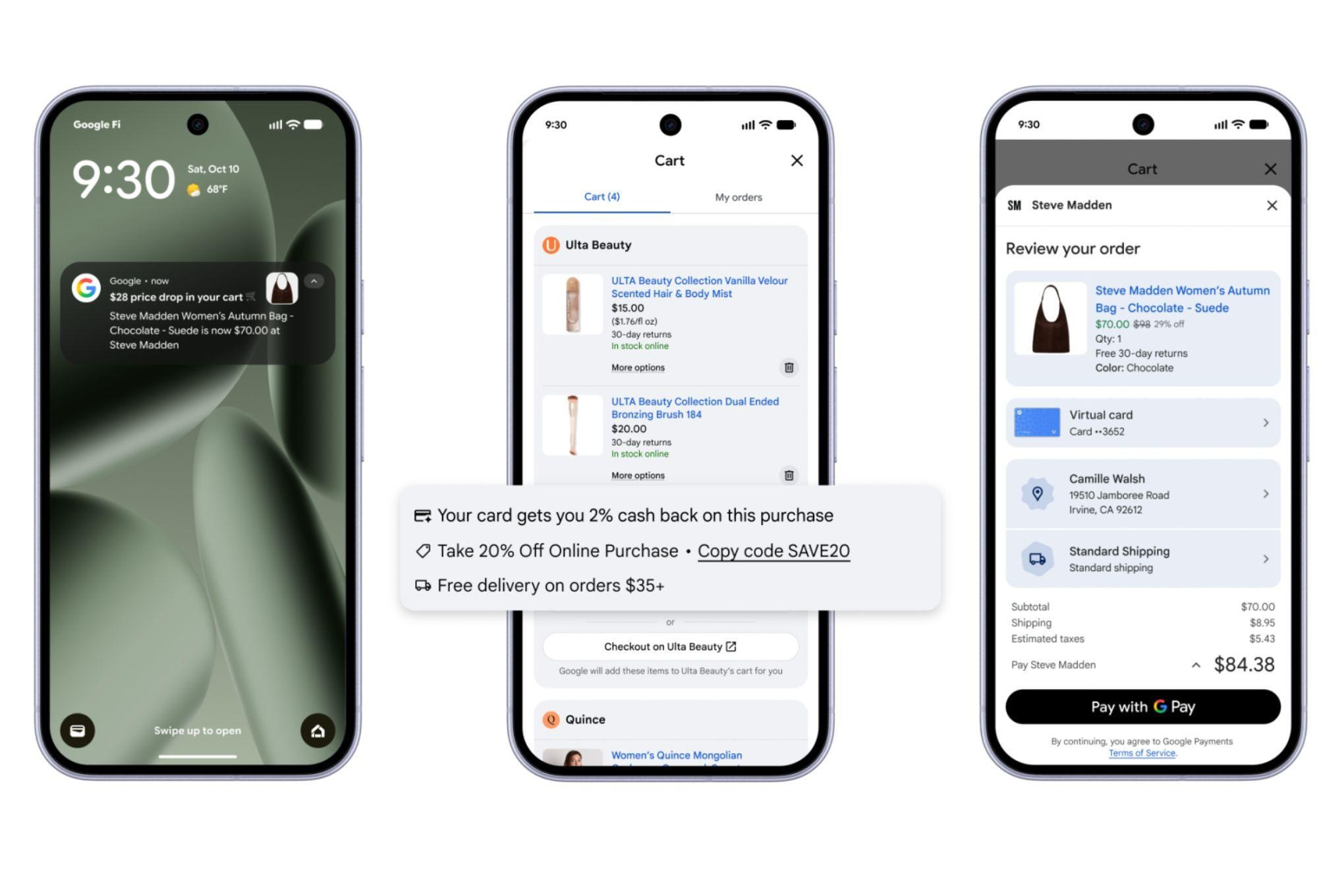
Google launches Universal Cart across Search and Gemini, letting shoppers save products from multiple retailers in one place with price-drop alerts and credit card optimization
Google unveiled a round of Google Health updates, including the new Fitbit Edge tracker, and expanded workout tracking
Google’s Gemini Notebook (fka NotebookLM) added 60-second video overviews, step-by-step learning overviews that pull your notes, slides and quizzes together, and new quiz formats. It’s pitched at students, but it works just as well for getting up to speed on a new product area
Claude Code made it easier to pick up where you left off and run multiple sessions at the same time. The new session screen keeps your recent folders one click away, and you can save a setup as an environment, like a few folders, an SSH host or the cloud, and start your sessions from there

Anthropic warned that small AI models could self-replicate through IoT devices. The theoretical malware would be difficult to stop as there’s no centralized point to shut it off
Perplexity open-sourced SPACE, the sandbox behind its Computer agent, reporting that agents did not escape the virtual machine in 108 red-team attempts
PostHog added five MCP tools, including Annotations (recent production changes) and Replay Vision (session scans), so agents can pull product analytics context into workflows
Amazon launched BeeAI wearables at $75-$100, bringing always-listening AI to users’ wrists & phones
Figma announced Code Layers feature, which lets product teams build a prototype in the canvas that runs on real code
Amex launches Intent Intelligence Framework to prevent rogue AI purchases. New API captures customer constraints before agents complete transactions, authenticating intent through tokenized credentials to stop unauthorized buys before they happen
Character.AI, the conversational AI chatbot startup, filed Chapter 11 and is selling assets to Disney for $20M after facing lawsuits over safety concerns
Getty Images, the Seattle stock photo company, also filed Chapter 11 and secured $533M from the Getty family and Koch Equity to go private
🤖 Futurism
Futurist Ray Kurzweil predicts humans will merge with AI by 2045 through brain implants and digital replicas, creating cybernetic versions indistinguishable from the original
📚 Good reads
How AI is reshaping PM work. Casey Winters explaisn how AI has become the PM’s core context layer, making it easy to spin up more stuff than ever, but not necessarily more impact. Doing more isn’t better, and doing the right thing now makes the difference
CB Inisghts State of AI Q3 2026. AI funding hit $103.3B in Q3 2026, down 33% QoQ, with 154 $100M+ megarounds taking 85% of all capital, and OpenAI’s $10B raise leading. The US led with 61% of funding and 24 of 42 new AI unicorns, while Europe and Asia each clocked $18.8B, driven by big chip, infra, and robotics bets. Exits cooled from Q2 but stayed historically high, with 372 M&A deals and 19 IPOs (notably Chinese AI chip players)
How employment is changing at Anthropic. Anthorpic explains that since AI agents now do far more hands-on execution, they hire fewer junior technical staff. Existing employees are shifting toward judgment-heavy roles that orchestrate fleets of agents. Across engineering, sales, legal, and ops, productivity jumps as people start designing workflows, and handling the strategic and interpersonal work that AI can’t yet reliably cover
Synthetic users miss human nuance. This piece compares answers from 604 real professionals to 120 AI synthetic users on how they label UX-type work. Synthetic participants seem fine for validating broad patterns, but you still need real users when rare perspectives, subtle role differences, and unexpected language matter
🎧 Good listen/watch
[Podcast] Inside the black box of AI models. Anthropic researcher Emmanuel Ameisen explains how LLMs plan ahead, build rich concept representations, and show structures loosely similar to conscious vs. unconscious thinking. He and Lenny explore why it’s often useful to anthropomorphize models. This is a useful piece if you want to understand what today’s frontier models can do and how they’re grown
[Podcast + article] How Meta designed Muse. Meta design director Alex Cornell shares how he built Museto feel like an ongoing relationship. The piece is packed with practical ideas on using overlooked data (like Instagram saves) and redefining craft for non-deterministic and usefulness-first systems
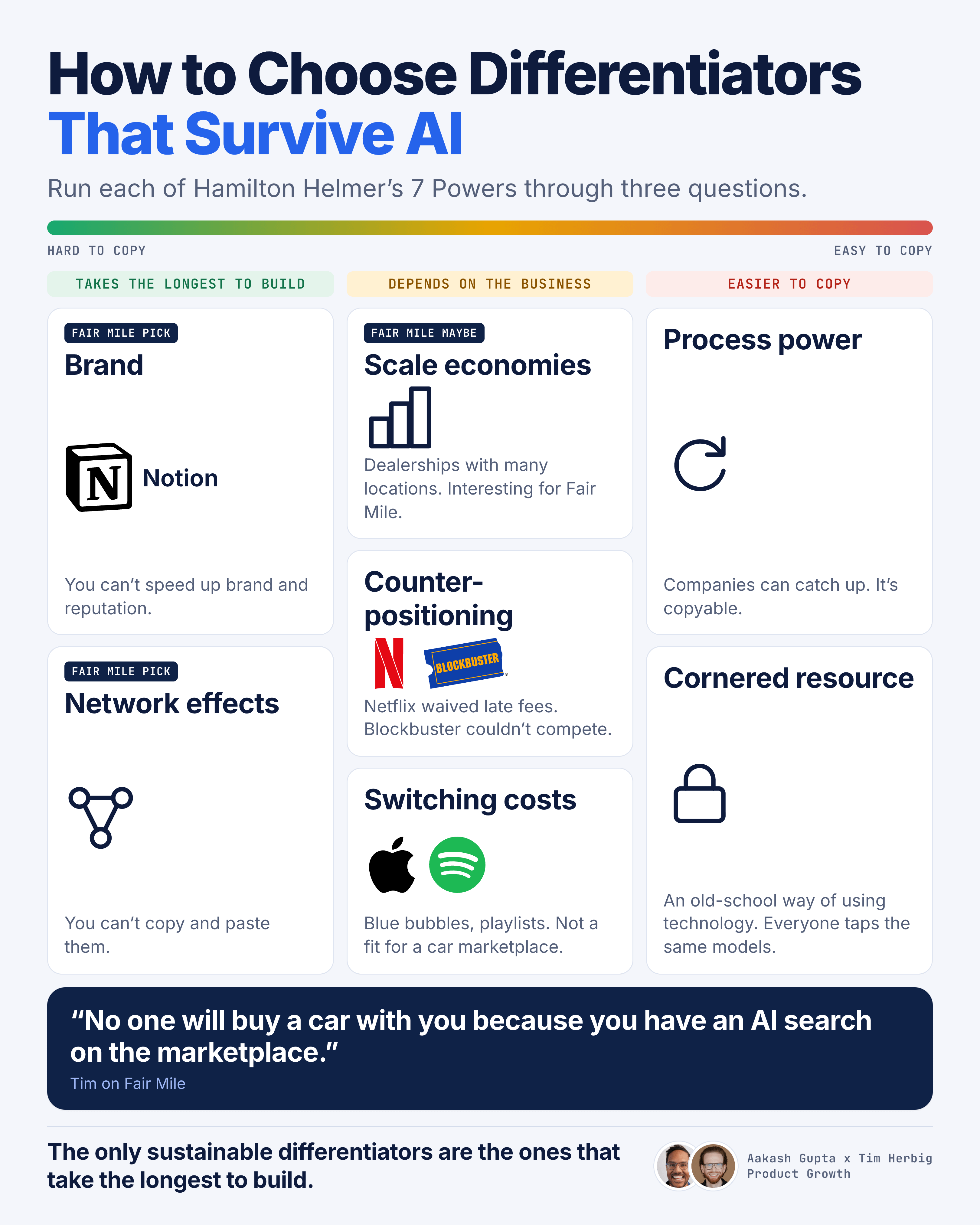
[Podcast + article] How to think about product strategy in the age of AI. AI has made shipping features cheaper, so strategy now matters more than ever to decide what’s worth building. Tim Herbig argues that good product strategy helps teams say “no” by defining a sharp narrative, audience, and a few real differentiators that survive AI commoditization. You can treat strategy like a product, pressure-test it, anchor it in durable advantages (brand, network effects, etc.), and tie roadmap bets to behavior-change metrics that show if the strategy is working
🧑💻 Worth learning
How to design a good MCP server for AI agents. Luca Rossi explains why MCP servers should be modeled around the real jobs agents perform for users. The piece includes a practical checklist PMs can use to shape or audit their own MCP strategy
🔧 Products to try
OpenMuse is an open-source personal agent you host yourself, with a browser, terminal, and files to work in, plus an action review step; free
Google AI Studio builds custom Android apps from a text prompt with no SDK setup, and you can install the result on your phone over USB; free
OpenScreen records your screen and turns it into a polished demo, with zooms placed on your clicks, a restylable cursor, and captions generated on your own computer; free and open source, no watermark
That’s all for this week.
Feel free to drop your comments/questions/feedback. Would love to hear what you’d like to see more about in WiP, so I can make it better for you.
Have a great start to your week!
